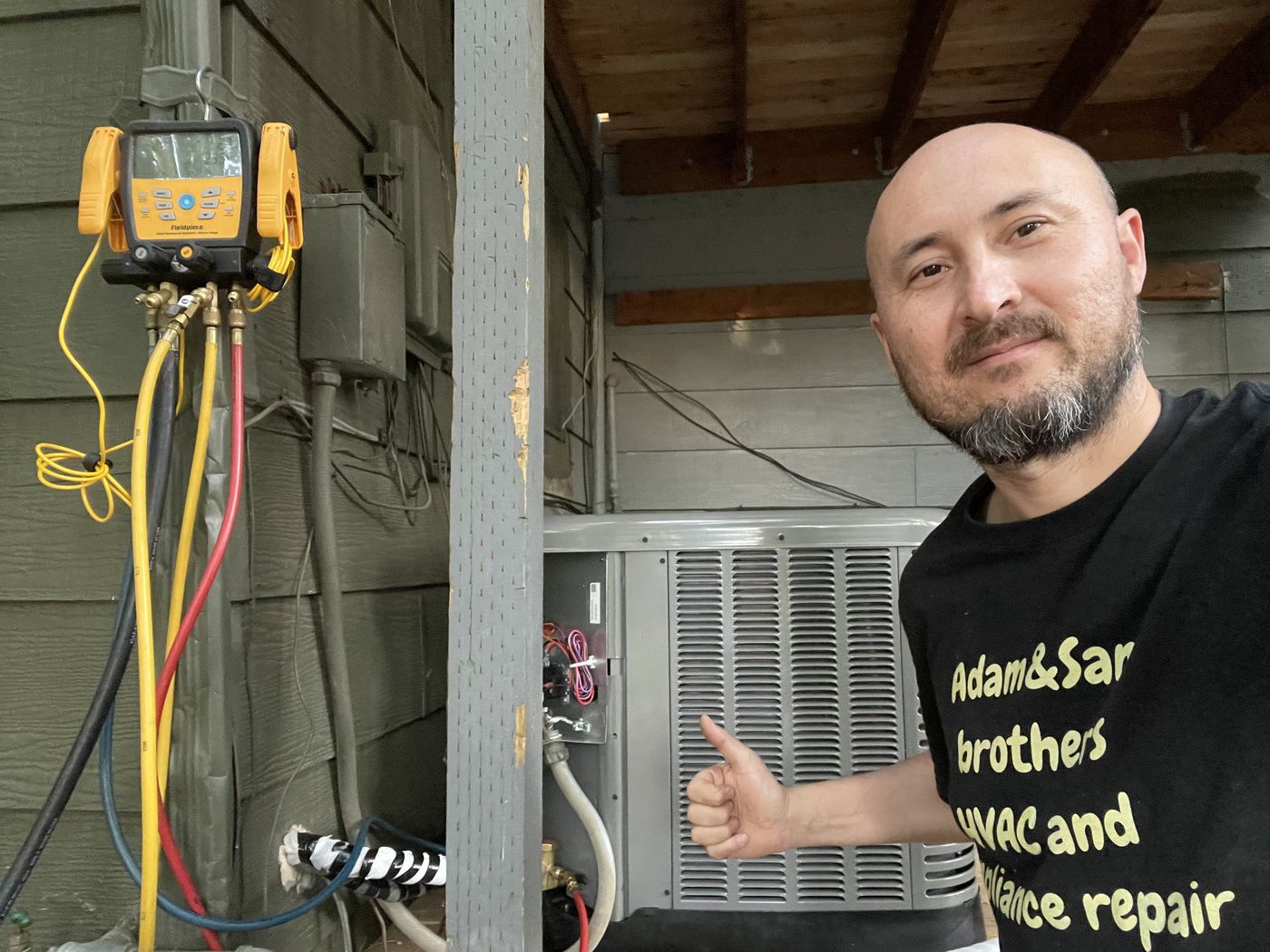
The fan hums, air moves through the vents, and the house stays at 78 and climbing. "Running but not cooling" is the most common summer call we take across the North Seattle metro, and it almost always comes down to four suspects — three of them refreshingly affordable.
1. The capacitor (check this one first, always)
The run capacitor is a small canister that gives the outdoor unit's compressor and fan the electrical kick they need. It's also the single most failure-prone part in residential AC — heat kills them, and our July heat waves harvest capacitors by the hundreds. The tells: the outdoor fan spins but the compressor never joins in (indoor air moves but isn't cold), a hum-then-click from the outdoor unit, or a fan that needs a push with a stick to start (a classic — and a one-week warning, not a fix). Capacitors are inexpensive and a same-visit replacement.
2. The condenser fan motor
If the outdoor fan doesn't spin at all while the unit hums, either that same capacitor or the fan motor itself has quit. Without the fan, the compressor can't shed heat, overheats, and cuts out on its internal protector — producing the maddening pattern of cool air for ten minutes, warm air for thirty. A motor is a standard-cost repair; ignoring it long enough graduates the bill to a compressor.
3. Filthy coils and the airflow tax
An outdoor coil furred with cottonwood fluff and dust can't dump heat; an indoor coil choked behind a filter nobody's changed since move-in can't absorb it. Either way capacity collapses and run-times stretch. The cottonwood snow that blankets Lynnwood and Mill Creek every June is a real seasonal event for AC coils — a proper cleaning restores a shocking amount of cooling, and it's part of any honest "not cooling" diagnosis.
4. Refrigerant — the one that isn't a top-off
Low refrigerant means a leak, full stop; the charge doesn't wear out. Signs: ice on the copper lines, a hiss at the coil, a system that cools feebly at midday but fine at night. Handling refrigerant falls under EPA Section 608 rules — we find the leak with instruments, quote the repair in writing, and explain the math when a leak sits somewhere expensive (see our R-22 article if your system is older).
What to do before we arrive
Set the thermostat to OFF for 20 minutes if the unit was struggling (lets a tripped compressor protector reset), check the filter, and clear debris from around the outdoor unit. Then let us put gauges and a meter on it — the four suspects above separate cleanly with instruments, and three of the four are fixed from the van the same visit, with a written quote before any work.