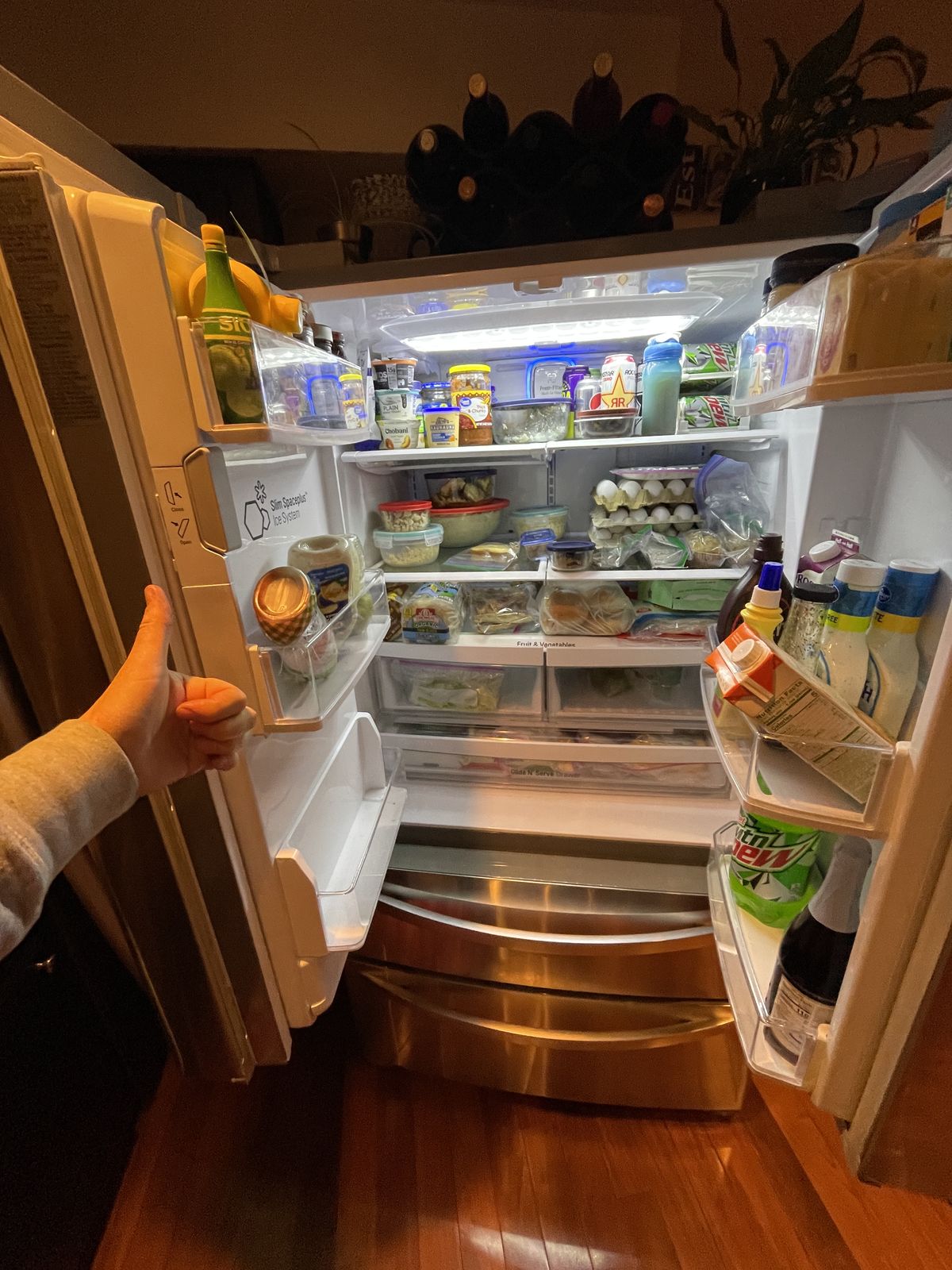
How our technicians track down the fault
We start with numbers rather than guesses: a probe thermometer in each compartment, an ear against the freezer wall for the evaporator fan, and a look at the condenser fan and coil underneath or behind the cabinet. Then the freezer back panel comes off, because the frost on the evaporator tells most of the story. An even, light coat means the sealed system is healthy and the trouble is airflow. A solid block of ice means defrost has failed somewhere along its chain. A bare coil beside a running compressor sends us to the sealed system. Each suspect gets a meter reading before it gets replaced, and on inverter models such as LG linear compressors we confirm the board is actually driving the compressor before that word appears on a quote.
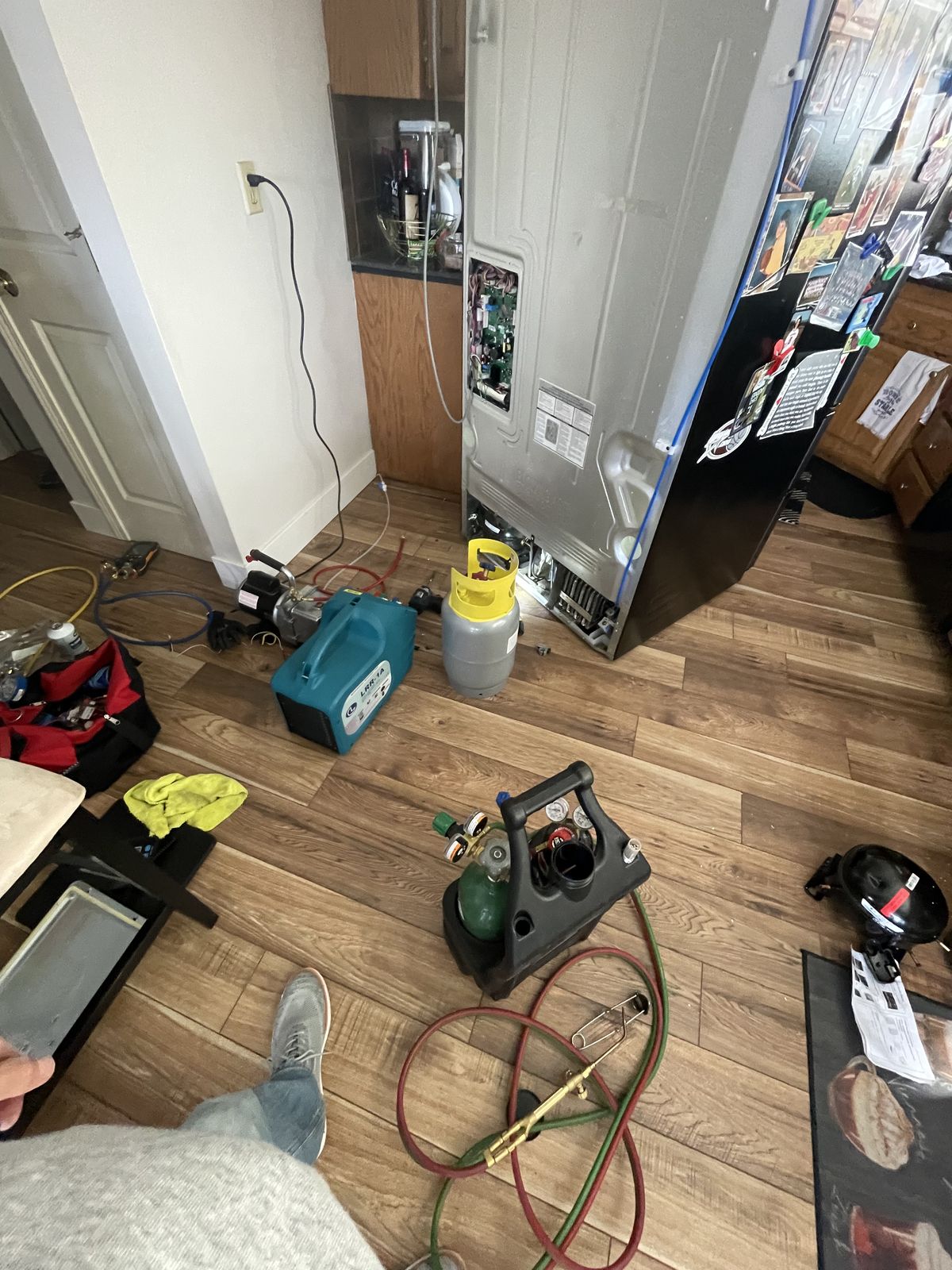
Most of what we open is Whirlpool, KitchenAid, Maytag, GE and Café, Frigidaire, LG, Bosch and older Kenmore, plus built-in Sub-Zero, Thermador and Fisher & Paykel columns. The van carries evaporator and condenser fan motors, start relays, defrost heaters and thermostats and water inlet valves, which is why many repairs end on the first visit. When a built-in board or a model-specific part has to be ordered, you get the timing in writing along with the price. Refrigerant work never leaves our hands: our own technicians recover the charge, braze with nitrogen flowing, pull a deep vacuum and weigh in the new charge under EPA Section 608 rules. Before we leave, we vacuum the condenser coil, test the door gaskets with a strip of paper, and set both compartments to food-safe targets of roughly 37°F and 0°F.