If you own an LG French-door from roughly the mid-2010s onward and it's slowly gone warm, you've probably already googled your way into the compressor saga. It's real — LG's linear inverter compressors failed young in large numbers, there was a class-action settlement, and we replace them regularly across the North Seattle metro. But the internet version of this story costs people money in two directions: some replace a fridge that only had a fan problem, others pay full freight for a part LG would have covered. Here's the field version.
How a dying linear compressor actually behaves
The classic pattern: the fridge runs — you hear it, the lights work, the compressor is even hot to the touch — but temperatures drift up over days or weeks. Ice cream goes soft first, then the fridge section follows. Often the trigger moment is a power outage: the compressor was limping, the restart after a windstorm finishes it. We see a cluster of these calls after every big Puget Sound outage.
The confirmation isn't guesswork: a technician checks whether the compressor is being commanded correctly by the inverter board, then looks at the evaporator behind the freezer's back panel. A healthy system frosts the entire evaporator coil evenly; a failed compressor (or a refrigerant leak) leaves it bare or with just a small frost patch at the inlet. That frost pattern is the truth-teller.
Before anyone says "compressor": the impostors
A warm LG with a cold freezer is usually not a compressor at all — it's the evaporator fan (listen for silence or a strained hum from the freezer's back), a failed defrost system letting the coil ice into a solid block, or the damper between sections stuck shut. These are honest, modest repairs, and we test them first precisely because the compressor is the expensive conclusion.
The warranty angle almost nobody uses
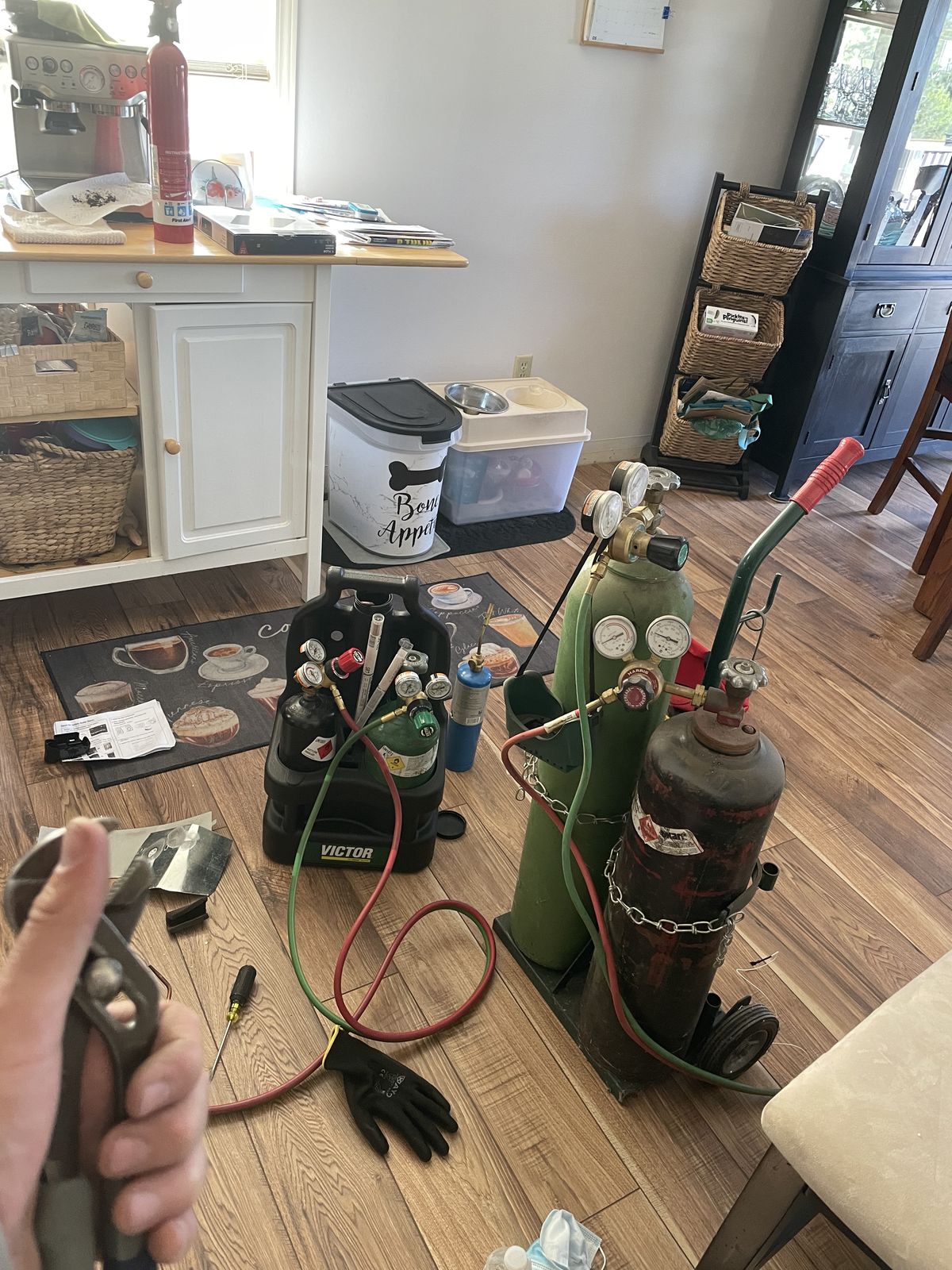
LG covers the sealed system — compressor included — for 10 years on most of these models (the compressor itself; LG's coverage of the repair visit ends much sooner). That means on a 2018 fridge, LG may still supply the compressor itself under warranty, which changes the math considerably. The job remains skilled work: recovering refrigerant, brazing in the new unit, pulling a vacuum, and recharging. Sealed-system work falls under EPA Section 608 rules — it is truly not a DIY or handyman job, and a bad braze turns a repairable fridge into scrap.
The repair-or-replace math
With the part covered, a compressor job on an LG that's otherwise healthy usually pencils out well against the price of a comparable new unit — especially since the replacement compressors LG ships now are a revised, more durable design than what failed. On a unit that's out of part warranty and has other issues, we'll give you the honest number and let you decide with real figures instead of forum panic.
What to do while you decide
Move food to coolers or a garage fridge, set both sections to max cold (it won't fix anything, but it slows the drift), and don't repeatedly unplug/replug — hard restarts are exactly what finishes weak linear compressors. Then get a real diagnosis: we check the fan, defrost, damper and frost pattern before the word "compressor" is allowed in the quote.