Half the housing stock around the North Seattle metro was built without air conditioning and often without ducts — electric baseboards, wall heaters, hydronic systems. For those homes, the ductless mini-split heat pump isn't a compromise; it's the technically correct answer, which is why you now see the little outdoor units multiplying across Shoreline, Edmonds and Everett. Here's the honest owner's briefing.
What a mini-split actually is
A compact outdoor heat pump connected by a slim refrigerant line set to one or more indoor "heads" — wall-mounted units that both heat and cool the room they live in. No ductwork, no major demolition: the connection needs roughly a three-inch penetration. Modern cold-climate models heat efficiently well below any temperature our marine climate produces, so this is a year-round system, not a summer gadget.
Why they suit our housing specifically
Homes without ducts get real heating/cooling without a remodel. Baseboard-heated homes cut their winter electric bills substantially, because a heat pump moves heat instead of generating it. Additions, garages-turned-offices, and upstairs bedrooms that roast every July get their own independent zone. And the summer story changed the math: after the heat events of recent years, "we never needed AC here" retired as a sentence.
Install day, demystified
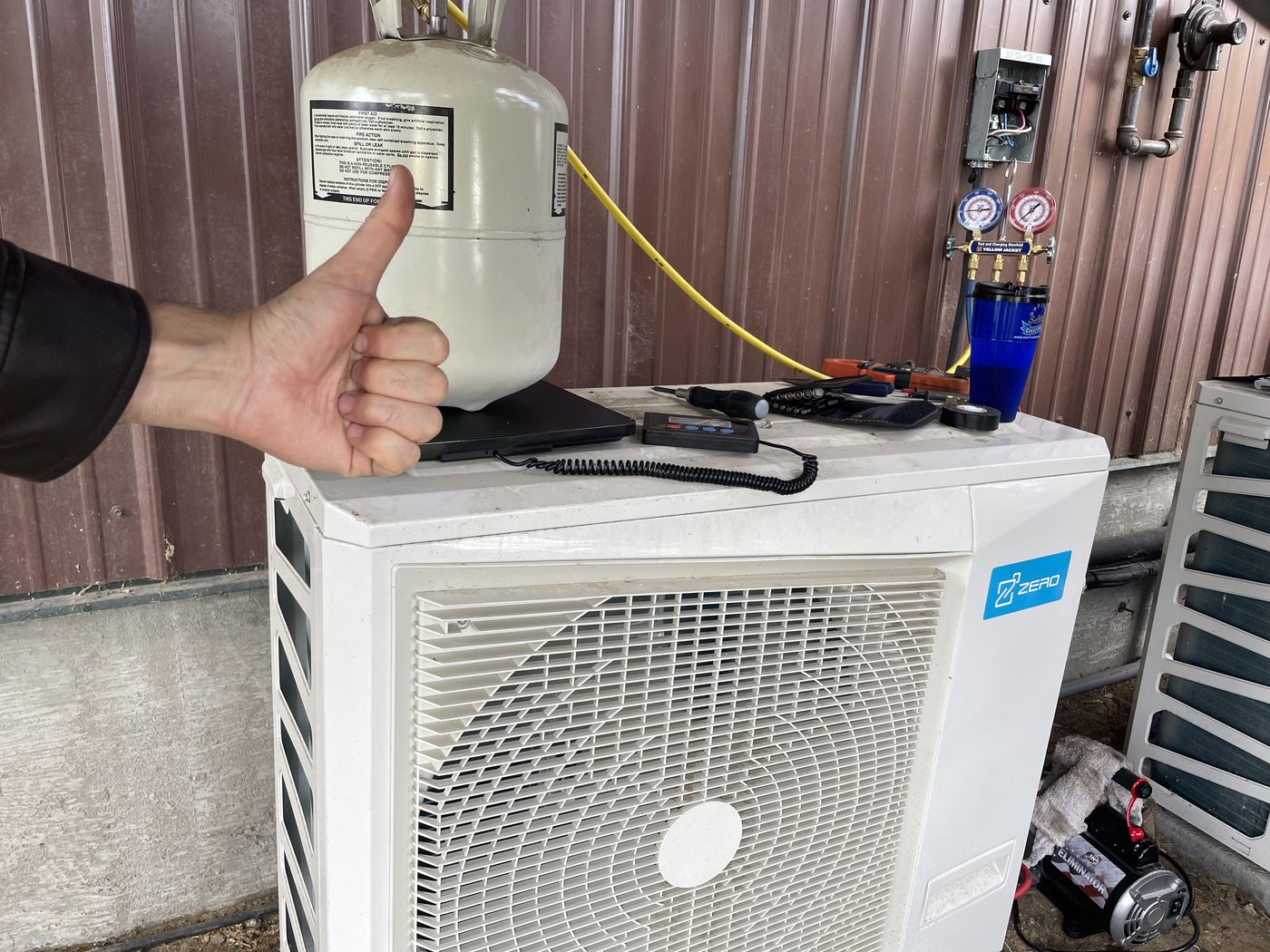
A single-zone install is typically one day: mount the indoor head, set the outdoor unit on a pad or wall brackets, run and insulate the line set and condensate drain, make the electrical connection at a new disconnect, then the part that separates a proper install from a cheap one — pressure-test the lines with nitrogen, pull a deep vacuum, verify it holds, and release the charge the outdoor unit ships with (or weigh in the correct charge for longer line sets). Skipping or rushing the vacuum is how mini-splits earn their rare bad reputation; moisture in the lines quietly destroys compressors over a few years. You'll see the gauge numbers at ours.
Sizing, said plainly
Bigger is not better. An oversized head short-cycles, dehumidifies poorly and wears itself; the right size runs low and steady, which is where these systems earn their efficiency. Expect measurements and a load conversation, not a guess off square footage alone — and multi-zone systems need each head sized to its room, not the biggest number in the catalog.
The quote
One written price, after a site visit that costs nothing, covering equipment, electrical, mounting, commissioning and the vacuum you can watch on the gauge — plus the honest talk about single-zone versus multi-zone for your actual floor plan. It's the same team for service afterward, which keeps everyone motivated to install like they'll see it again.