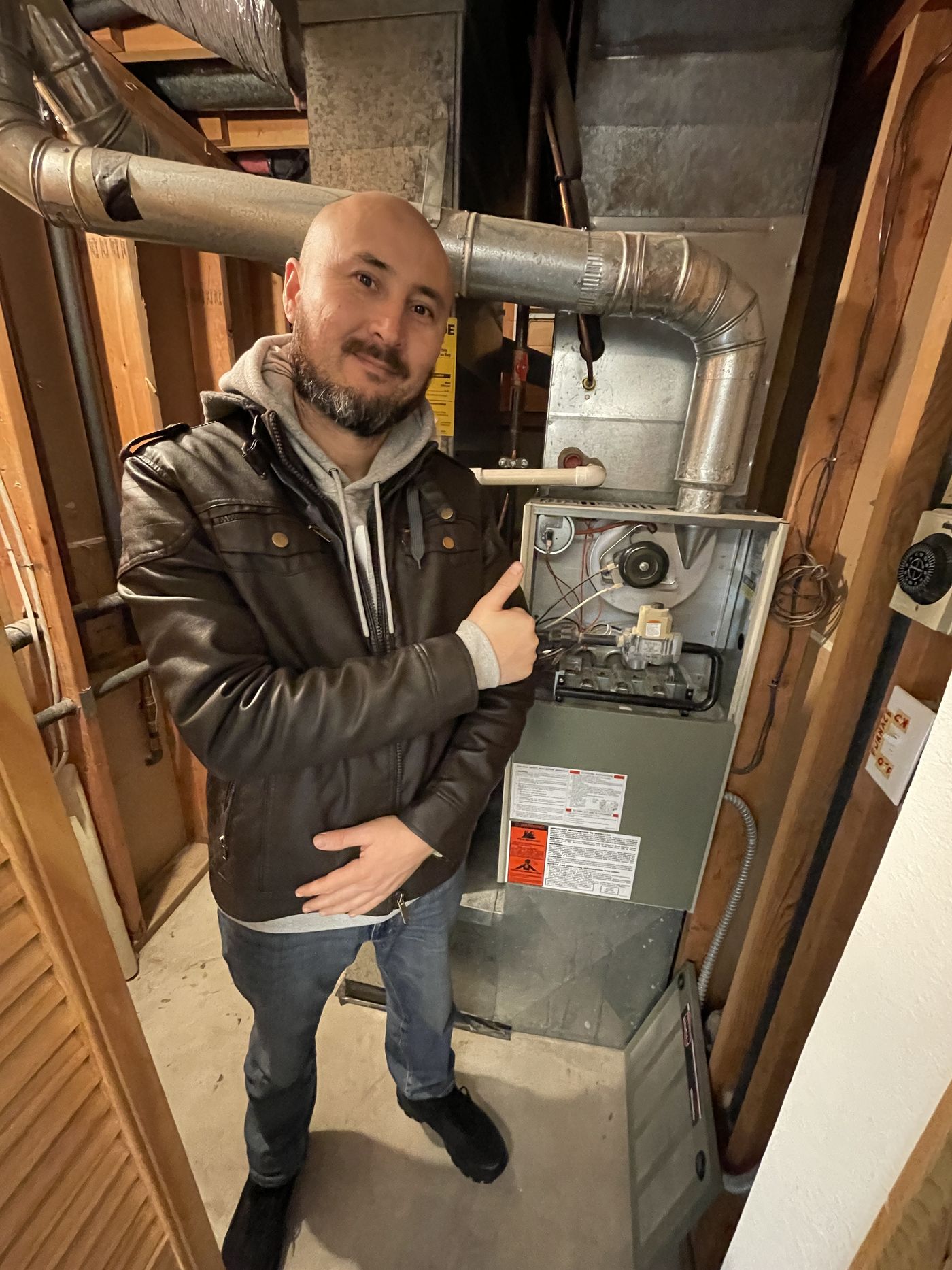
A furnace that clicks, whirs, tries, and goes cold follows a strict startup script — and where the script stops tells you which part flubbed its line. Here's the ignition chain the way we watch it on a no-heat call, link by link.
The script, in order
Thermostat calls → the inducer fan spins up (the small motor you hear first, clearing the flue) → the pressure switch confirms that draft → the igniter glows orange → the gas valve opens and burners light → the flame sensor confirms fire within seconds → the main blower starts. A failure at any link aborts the attempt; three strikes and most furnaces lock out, blinking an error code at you (we wrote a separate guide to reading those lights).
The two celebrity failures
The hot surface igniter is a brittle ceramic wand that glows white-hot thousands of times a season; it cracks from age or one wrong touch, and then everything runs but nothing glows and no flame ever appears. Inexpensive part, extremely common, in the van. The flame sensor is the opposite failure: burners light beautifully, then slam off after 3–8 seconds — the sensor's oxide-coated rod can't "see" the flame, so the control assumes danger and closes the gas. The fix is often just cleaning the rod, which is why light-then-die-in-seconds is our favorite phone diagnosis: it's frequently a modest visit.
The quiet gatekeepers
A pressure switch that won't close usually isn't the switch — it's what the switch is checking: a blocked flue or intake (in our climate, occasionally a bird's nest or ice at the exterior termination), a failing inducer, or a kinked switch hose. High-efficiency furnaces add a twist: a clogged condensate drain backs water into the pressure switch tubing and blocks ignition — a plastic-tube problem masquerading as a gas problem, and a very common find in Bothell and Mill Creek basements. The gas valve itself fails last on the list and gets tested, not guessed.
The homeowner pre-checks
Thermostat actually calling (heat mode, setpoint above room), furnace switch on (it looks exactly like a light switch, and painters flip it), gas valve handle open, filter not collapsed, and one full power cycle at the switch to clear a lockout for a single retry. If it still won't light — stop cycling it and call; repeated failed ignitions dump small gas puffs nobody should keep retrying against. We watch the script run, name the failed link, and give you a written quote — most ignition repairs finish the same visit.