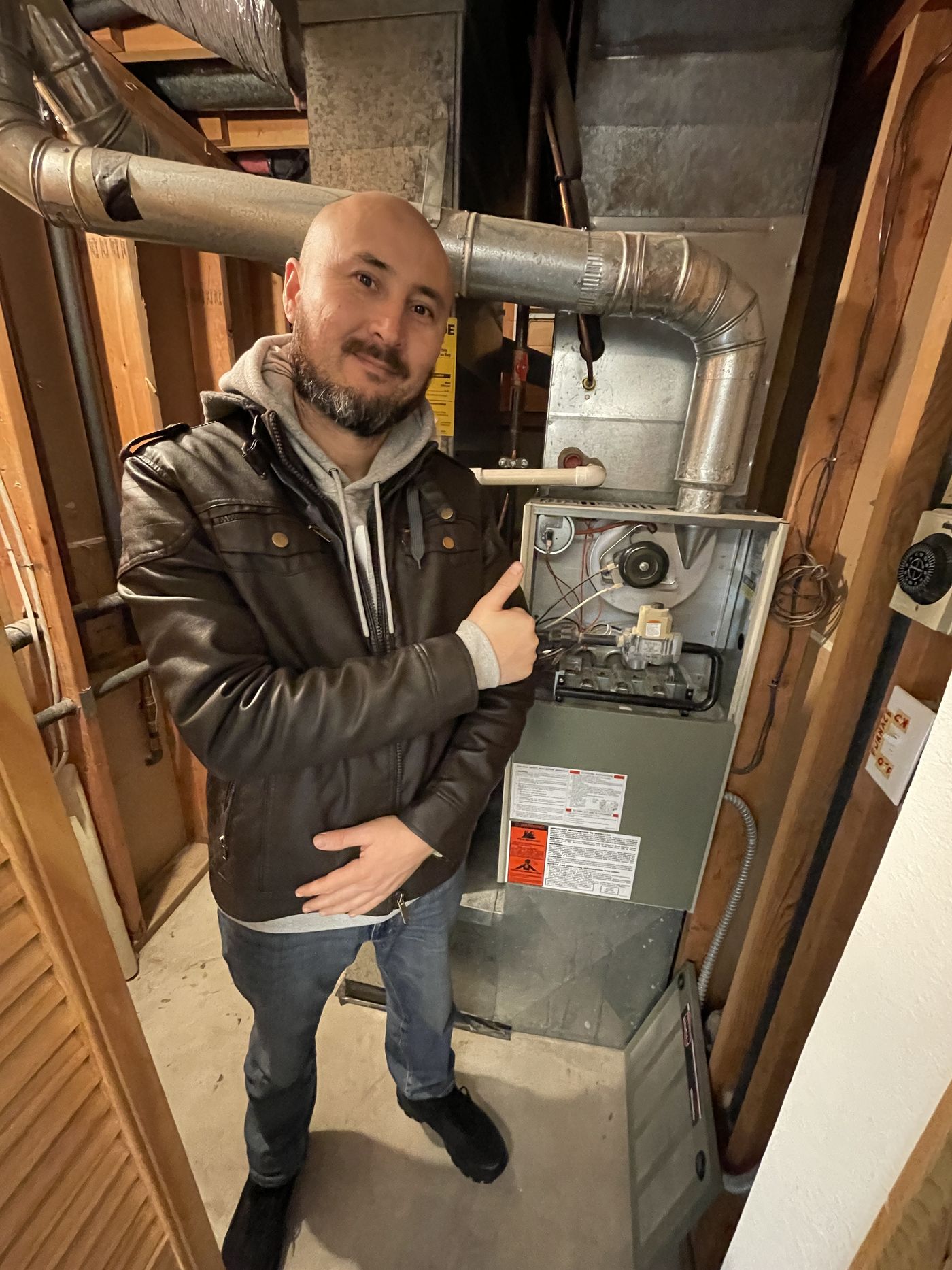
A healthy furnace runs in long, lazy cycles. One that fires up, quits after two or three minutes, rests, and fires again all evening is short cycling — and beyond the annoyance, it's the most expensive way a furnace can run: every ignition is the highest-wear moment of the cycle, and the house never gets properly warm between them. The causes stack in a ladder; here's how we climb it.
Rung one: overheating (the majority)
The furnace makes heat faster than starved airflow can carry it away; the high-limit switch cuts the burners; things cool; it relights — loop. The starvation suspects: a loaded filter (check first, always), a weakening blower motor or its capacitor, a dust-matted indoor AC coil sitting in the airstream, or too many closed and furniture-blocked registers. The signature: the blower keeps running a while after burners quit, exhausting the trapped heat. Chronic limit-tripping isn't just inefficient — it's the aging accelerant for heat exchangers, which is why this rung deserves fixing rather than tolerating.
Rung two: the flame sensor rhythm
If cycles are very short — light, run seconds, die, retry three times, lock out — that's not overheating, that's a flame sensor losing sight of the fire. Different rhythm, much cheaper rung: often a cleaning of the sensor rod.
Rung three: high-efficiency plumbing
Condensing furnaces make water, and a clogged condensate drain or trap backs up into the pressure-switch tubing, tripping safeties mid-cycle in a way that looks electronic and is actually a plugged plastic tube. A very common find in local basements and closets, and a satisfyingly tidy repair.
Rung four: the lying thermostat
A thermostat over a heat register, above a lamp, or with a drafty wire-hole behind it lives in its own microclimate and cycles the furnace to match. If the furnace itself checks out, the fix is location or a squirt of sealant in the wall hole — the cheapest rung on the ladder.
An honest sizing footnote
Some furnaces short cycle because they're simply oversized for the house — they hit setpoint in minutes by brute force. You can't repair a sizing decision, but staging settings and blower adjustments can civilize one, and it's worth knowing before that furnace is ever replaced like-for-like. We measure temperature rise against the nameplate, walk the ladder with instruments, and write up a quote for the rung you're actually on.