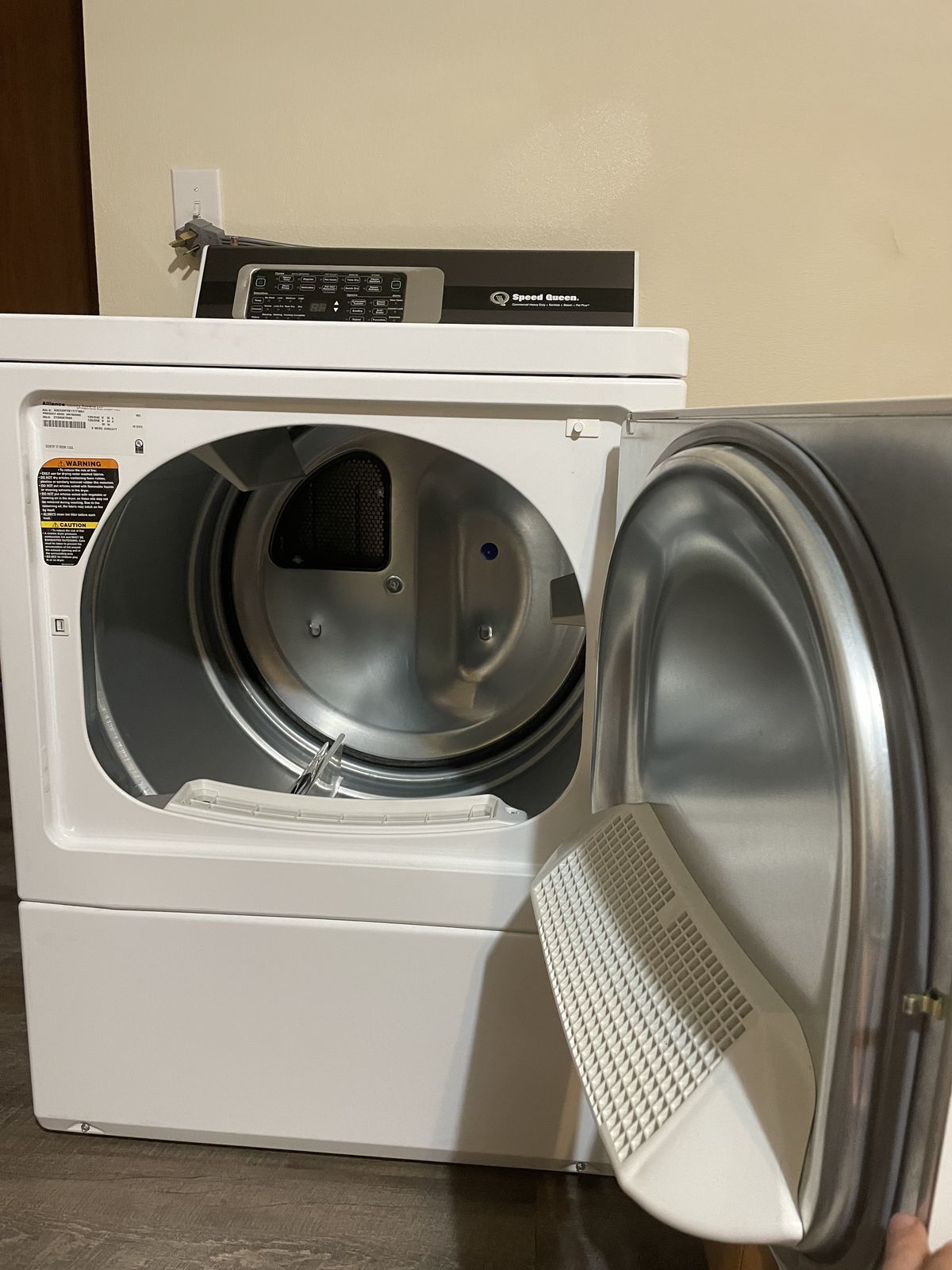
Every week someone in a Lynnwood or Everett laundry room asks us the same slightly guilty question: "It's really old… should I even fix it?" When the machine is a Kenmore 80 Series — or its 60/70/90 siblings — our answer surprises people: these are among the most repair-worthy dryers ever made, and the math usually backs that up.
What you actually own
The 80 Series is a Whirlpool-built (110-prefix) dryer from the era before circuit boards ran everything. Inside: a motor, a belt, a heater, two thermostats, a thermal fuse, a mechanical timer. That's the whole cast. No touchpads to fail, no boards to fry in a windstorm outage, and every single part is still manufactured and inexpensive because it's shared across millions of Whirlpool machines.
What actually fails, and what it costs
After decades of these in our service van, the failure list is short and the parts are cheap: the thermal fuse (no heat or no start — usually the vent's fault, not the fuse's), the belt and its companion idler pulley (drum won't turn, or squeals), drum rollers (rhythmic thumping), the door switch (dead dryer, no click), and eventually the heating element. Our dryer repairs start at $235, and fuses, belts and rollers are among the simpler jobs in that category. The motor is the only costly component, and 80 Series motors are notoriously stubborn about dying.
The replacement math nobody runs
A new mid-range dryer costs well more than a typical repair, before delivery, haul-away, and the discovery that new machines are built around sensors and boards with their own repair bills waiting. A typical 80 Series repair lands well below that and buys years, not months — because the rest of the machine is over-built by modern standards. There's also a quiet efficiency truth: a simple dryer with a clean vent dries faster than a fancy one strangling on a clogged duct, which describes half the "upgrade" motivations we hear.
The one honest exception
We'll talk you out of a repair in two cases: a seized motor plus other worn parts stacking into real money, or a drum with rust-through at the seams shedding flakes onto clothes. Those machines have given their all. Everything else — fuses, belts, rollers, switches, elements — is routine maintenance on a design that plans to outlive us both.
Our approach
We diagnose with a meter, put the price in writing, and give you the honest keep-or-replace read for your specific unit — including the airflow measurement, because on a 20-year-old dryer in our damp climate, the vent is part of the patient. Most 80 Series repairs finish in one visit with parts from the van.