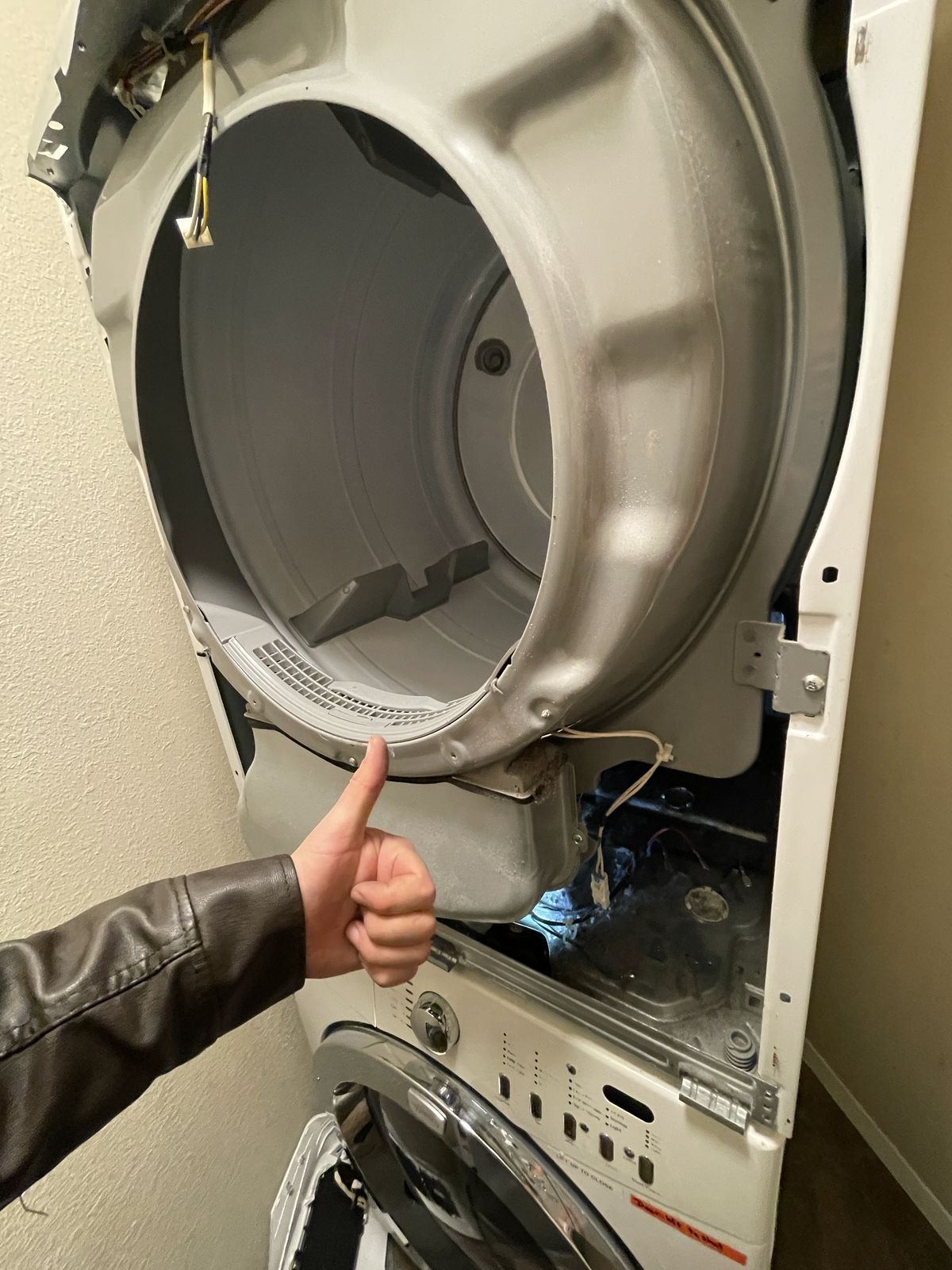
Maytag owners tolerate squeaks longer than anyone — the machine still works, and Maytags have a reputation to uphold. But that squeal is a wear part filing its resignation, and on these dryers the noisy parts are cheap while the damage they cause when ignored is not. Here's how we locate a Maytag squeak by ear before the panels ever come off.
Squeal from the lower rear: idler pulley
The belt-tensioning idler spins constantly on a small bearing. Dry bearing → rising squeal, often loudest on startup or in a cold garage, sometimes easing as things warm. This is the most common Maytag noise on both modern and classic machines. Ignore it long enough and the pulley seizes, the belt burns or snaps, and a small-part repair becomes a bigger visit.
Rhythmic squeak-thump in time with the drum: support rollers
Modern Maytags (Whirlpool-built) carry the drum on rollers; when one flattens or its shaft dries out, you get a squeak or thump locked to drum speed. Rollers wear as a family — replacing one and leaving three tired siblings is how you end up opening the cabinet twice, so the correct repair is the full set plus belt while the cabinet is open.
Squeak from the top front, loaded worse: drum glides
Several Maytag designs rest the drum's front lip on plastic-and-felt glides. Worn glides squeak most with a heavy load and can graduate to a scraping sound — at which point metal is wearing on metal and brown marks may show on clothes. Glides are inexpensive; a scored drum lip is not.
The classic-Maytag exception
Old Dependable Care dryers use a different drum support arrangement, and their signature complaint is a screech from the rear drum bearing area. These machines are so simple inside that the repair kit is modest and the work quick — another reason the 20-year-old Maytags around Everett and Shoreline keep earning their keep.
Why we replace noise parts as a set
Idler, rollers, belt, glides all live the same life: heat, lint, and millions of rotations. When one announces retirement, the rest are close behind. Opening the cabinet is most of the effort, so a proper noise repair swaps the whole wear set in one visit with one written quote — and the dryer goes quiet for years, not weeks.