Furnace
The Blinking Light on Your Furnace Is Talking: How to Read Error Codes
The LED behind your furnace's panel window blinks a code. Count the flashes, check the door legend, and learn what common codes mean and which are DIY.
 Formerly Adam & Sam Brothers Repair
Furnace repair & replacement
A furnace that clicks and never lights, one that runs a few minutes and quits, an electric unit blowing cool air: we repair gas and electric furnaces across the north end and replace them when the numbers say it is time.
How a house north of Seattle stays warm depends a lot on where it sits. Census figures show roughly two thirds of homes in Everett, Mountlake Terrace and Lynnwood heat with electricity, a mix of baseboards, heat pumps and electric forced-air furnaces in 1960s and 70s houses and newer townhomes. Brier, Mill Creek and the Silver Firs area run the other way, with gas the majority fuel, and Woodway is overwhelmingly gas. In Shoreline the two fuels run nearly even, and Lake Forest Park, with the oldest houses on our list, leans toward gas. Our technicians work on gas and electric furnaces every week, so the visit fits whatever sits in your basement, garage or hall closet. Plenty of furnaces here are also tucked into crawlspaces or attics, which changes how long a repair takes and is worth mentioning when you call.
The failures follow the fuel. Gas furnaces mostly stop at ignition: a cracked hot surface igniter, a flame sensor coated with oxide, a pressure switch that cannot prove draft, or on 90-percent-plus models a plugged condensate trap that backs water into the switch tubing. Electric furnaces lose heat strips and the sequencers that stage them, and both types wear out blower motors and capacitors. The first cold rain of fall brings a wave of calls, and windstorms add their own, since surges after outages can damage control boards. On older standard-efficiency furnaces we also inspect the heat exchanger with a light and a camera whenever the age justifies it. If you ever smell gas, leave the house without flipping any switches and call PSE at 1-888-225-5773, or 911, once you are outside.
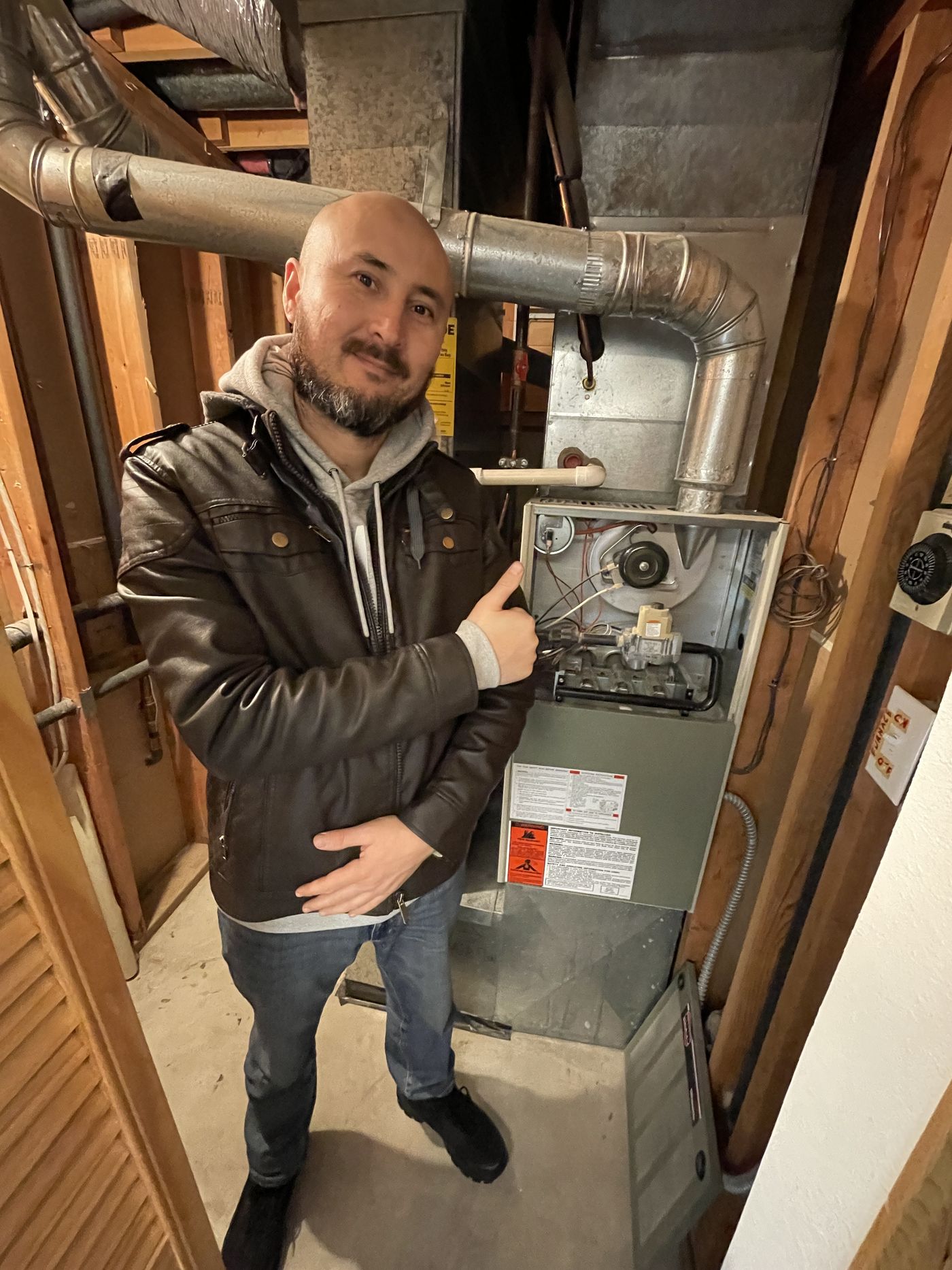
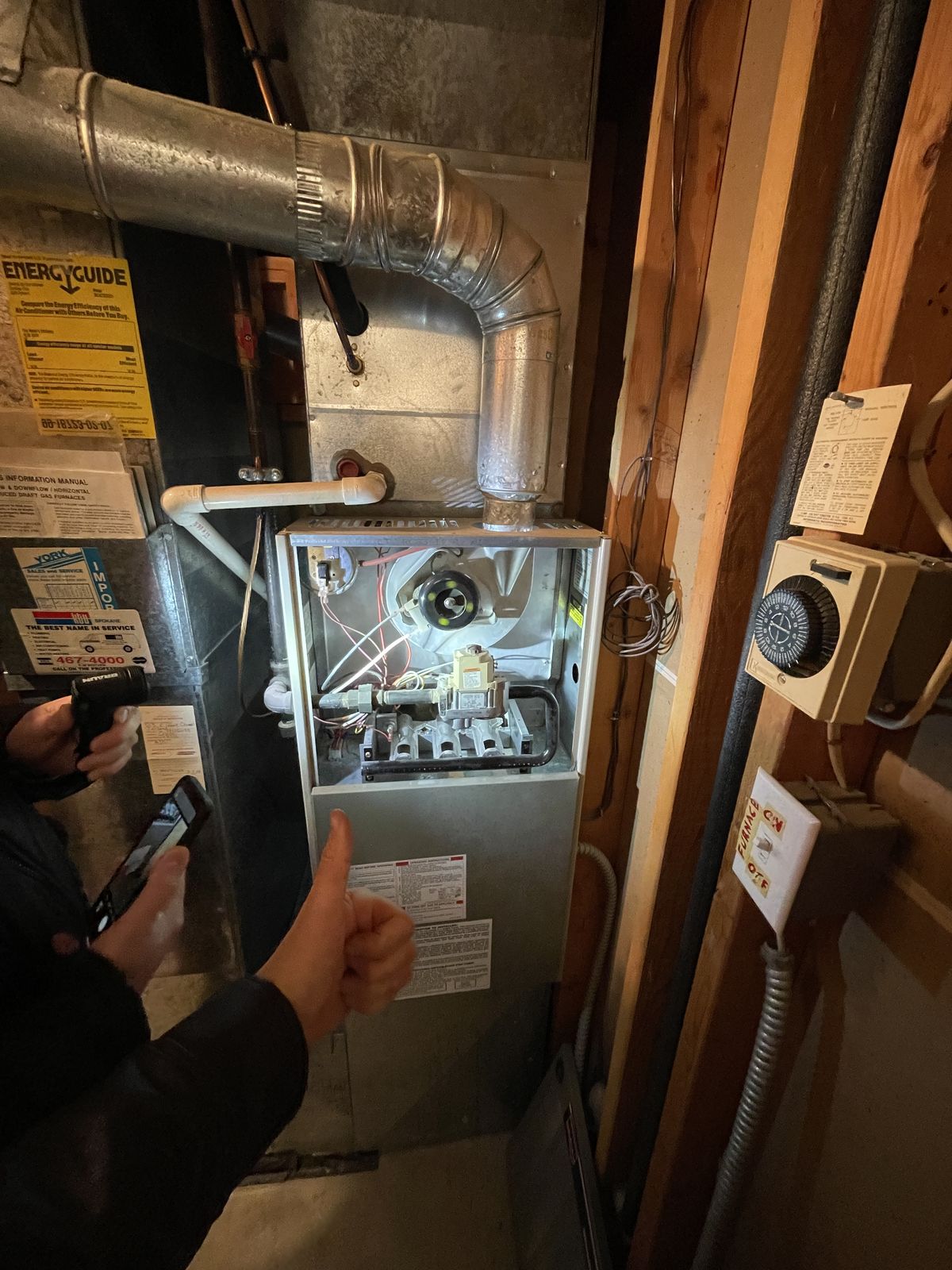
Tell us the blink code from the control board window when you call, and we often arrive already narrowed to one subsystem. On site we watch the startup sequence: thermostat call, inducer, pressure switch, igniter, gas valve, flame proof, blower. Wherever it stops is where we test, with a meter on the switch or igniter and a microamp reading on the flame sensor. On electric furnaces we check each heat strip, sequencer and limit with power applied and measure the temperature rise. We service Carrier, Bryant, Trane, American Standard, Lennox, Goodman, Rheem, Ruud and York, and igniters, flame sensors, pressure switches, limits, sequencers and capacitors ride on the van. Furnaces from the 1990s and earlier often use older ignition designs, and the universal igniters and controls we carry fit most of them.
When a furnace is near the end, we write the repair price and a replacement price side by side. An 80-percent gas furnace can often reuse an existing metal flue, while a 95-percent condensing model needs PVC venting and a condensate drain, and a federal rule scheduled for late 2028 will require condensing efficiency on most new gas furnaces. Homes with electric furnaces can replace like for like or add a heat pump outdoor unit so the furnace becomes backup heat. New equipment is sized from the house rather than the old nameplate, since many homes have been reinsulated or had windows replaced since the original went in. Gas service comes from Puget Sound Energy everywhere we work; for heat pump paths, we check which Snohomish County PUD, Seattle City Light or PSE programs apply.
Furnace repair starts at $285, gas or electric. Flame sensors and igniters are the everyday jobs on gas furnaces, burned heat strips and sequencers on electric ones, and inducers and blower motors sit toward the upper end. A new 95-percent gas furnace starts at $6,500, equipment and installation included. Treat these as the starting point for this area, not a quote; the written estimate after the diagnostic carries the exact number. For a replacement, the site visit and the written quote cost nothing, and venting, ductwork and permits shape the final price. On a furnace older than about fifteen years, the estimate lists a replacement option next to the repair.
Starting prices for the north Seattle area, 2026. The $85 diagnostic is included in any repair you approve, and the exact price is in the written estimate before work starts.
Install prices start here, equipment and installation included, before any utility program. Multi-zone systems are priced after a visit. We do not charge for the site visit or the written quote.
Furnace
The LED behind your furnace's panel window blinks a code. Count the flashes, check the door legend, and learn what common codes mean and which are DIY.
Furnace
Fan-ON settings, flame sensor dropouts, overheating limit trips, dead igniters and duct leaks all blow cold. How to tell which one you have.
Furnace
No-ignition calls follow a chain: inducer, pressure switch, igniter glow, gas valve, flame sensor. Where each link fails and what the clicking means.
Weigh the repair against the furnace's remaining life. An igniter, flame sensor or limit switch on an older furnace is still usually worth doing. A failed inducer or control board on a unit near twenty years old deserves a replacement quote beside it. A confirmed cracked heat exchanger settles the question, and we show you the evidence before recommending replacement.
The most common cause is overheating: a clogged filter or weak blower lets heat build until the limit switch shuts the burners off. A dirty flame sensor causes a faster pattern of lighting and dropping out. Condensing furnaces can short cycle when the condensate trap backs up. Change the filter first; if it continues, we measure temperature rise and test each part.
Confirm the thermostat is on heat and set above room temperature, replace a dirty filter, check the breaker, and make sure the furnace door is fully seated, since a door switch stops the furnace when the panel is loose. Look for a service switch near the furnace that resembles a light switch and make sure it is on. Do not keep resetting it.
Yes. Many electric furnaces can stay as the air handler and backup heat while a heat pump outdoor unit does most of the heating and adds summer cooling. In other homes, a new heat pump with its own air handler makes more sense. We look at duct sizes and the electrical panel and quote each option in writing.
Yes. Plenty of furnaces north of Seattle sit in a crawlspace under a 1960s rambler or in the attic of a newer townhome. Access changes how long a repair takes, not whether we take it on. Tell us where the unit is when you call and clear a path to the hatch; we bring drop cloths, work lights and the components most likely to have failed.
Talk to Adam & Sam
House getting colder by the hour? Call us, or book online and the repair is up to $18 cheaper. The $85 diagnostic is counted inside the repair price once you approve it, and a replacement site visit costs nothing.
Schedule a repair
Send the basics and we call you back with an arrival window, most days the same morning.