Shoreline homes, water and power
Shoreline is split down the middle by I-5, and so is its water. West of the interstate, Seattle Public Utilities serves roughly 58% of residents; east of it, the North City Water District buys the same Seattle supply. North of Green Lake, that usually means Tolt River water, measured early in 2026 at about 1.2 to 1.4 grains per gallon. In practice, scale is almost never why a Shoreline inlet valve fails. When we replace one here, it is usually because the plastic body cracked with age, or because a remodel left the water line kinked behind the cabinet where nobody can see it. A pinched line starves the dispenser and the ice maker long before it leaks, so we look behind the unit first.
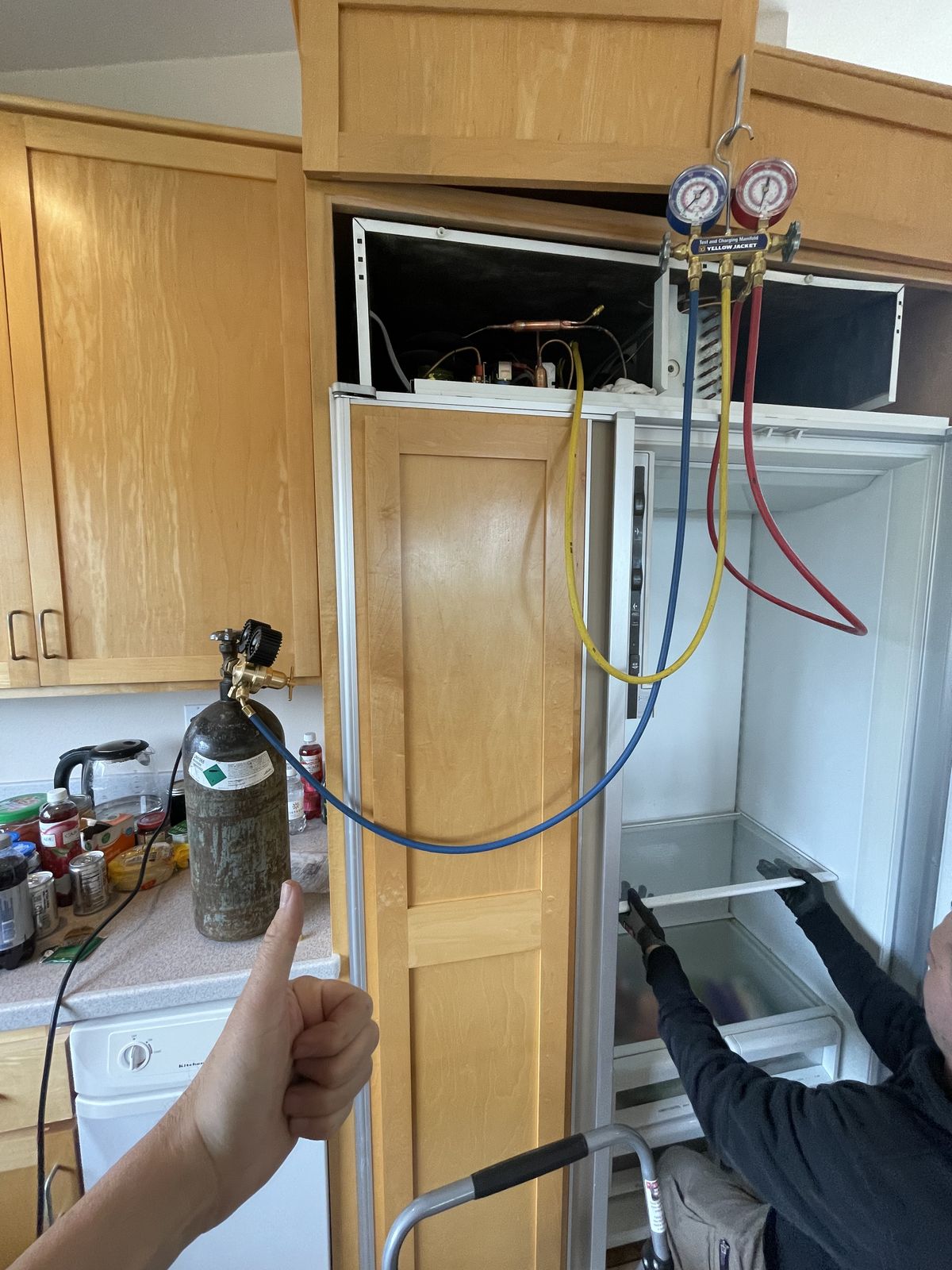
Many Shoreline houses also sit under big trees, and Seattle City Light lost power to tens of thousands of customers during the November 2024 bomb cyclone. Long outages are hard on aging electronics. A control board that was already marginal can fail to restart cleanly when the power returns, and a fridge that sat warm for a day often has a freezer full of meltwater that refreezes in the drain. After a storm, we check both before assuming anything worse. In Richmond Beach and Innis Arden, view homes more often have built-in refrigerators with top-mounted condensers, and those need the grille off and the coil cleaned before any other test means much.
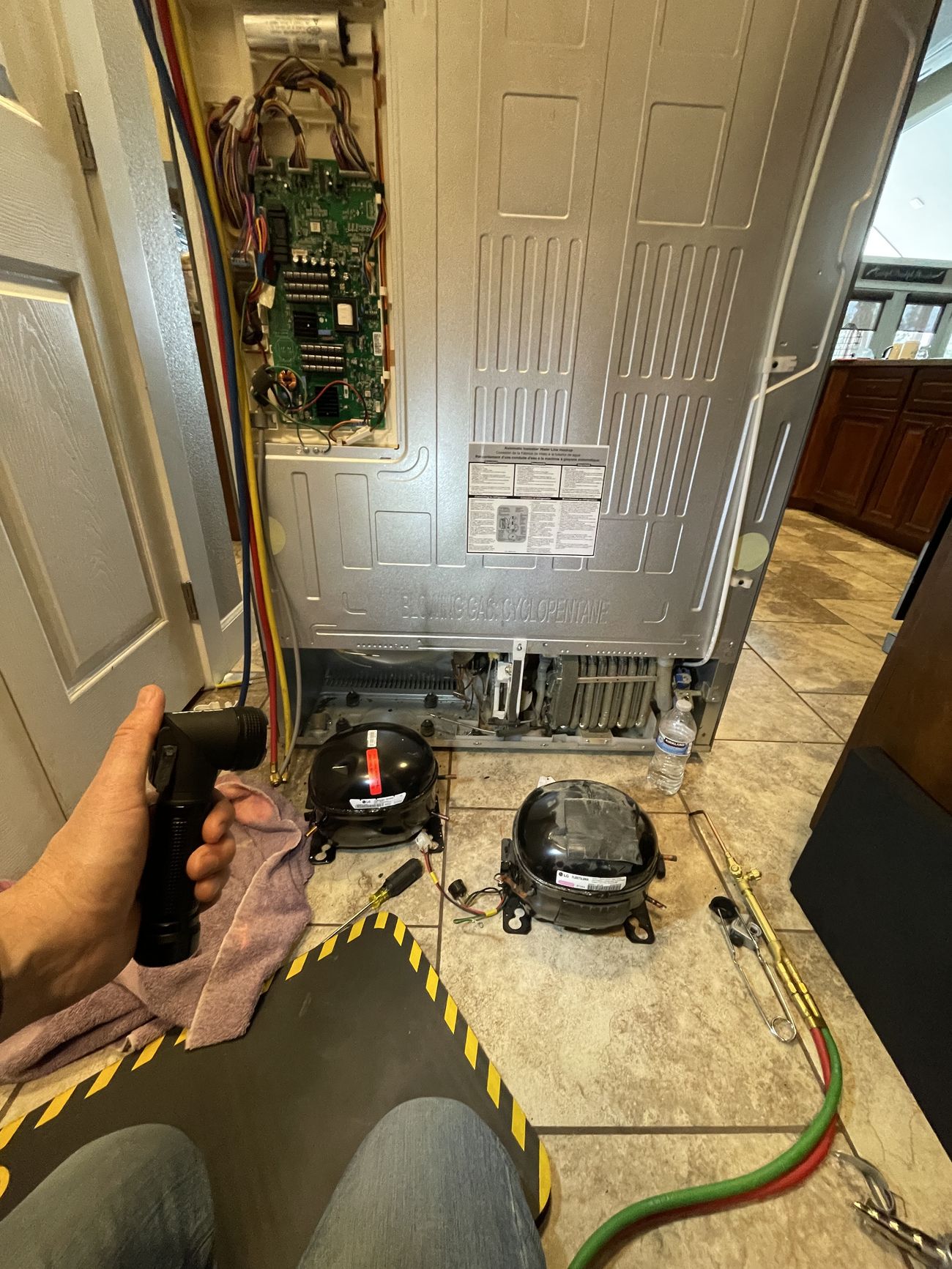
The two light rail stations at 148th and 185th have brought new apartment and townhome buildings to the neighborhoods around them. Those units carry newer, mostly electronic refrigerators, and we work in them the same way we do in a house: diagnosis, written price, then the repair. Townhome kitchens are often on the second floor, and stacked layouts leave little room behind the fridge, so we bring floor protection and walk the unit out a few inches at a time rather than dragging it across new flooring. If your building needs a contractor sign-in or a parking pass, tell us when you book so the visit is not spent at the front desk.