North Kirkland homes and their refrigerators
North Kirkland's housing is older than many people expect. About 37% of the city's homes went up between 1960 and 1979, with 23% in the 1970s alone, and Kingsgate, Finn Hill and Juanita hold much of that stock, largely split-levels and ramblers, most with kitchens remodeled once or twice since. The refrigerators in them are usually much newer than the houses, often counter-depth French-door models with Wi-Fi, multiple sensors and electronic boards. Another 31% of homes date from 1980 to 1999, and across the city roughly one household in five lives in a complex with twenty or more units. In condo kitchens near Totem Lake, the fridge opening is often tight and the water shut-off can be hard to find, so if you know where yours is, or who in the building controls it, tell us when you book.
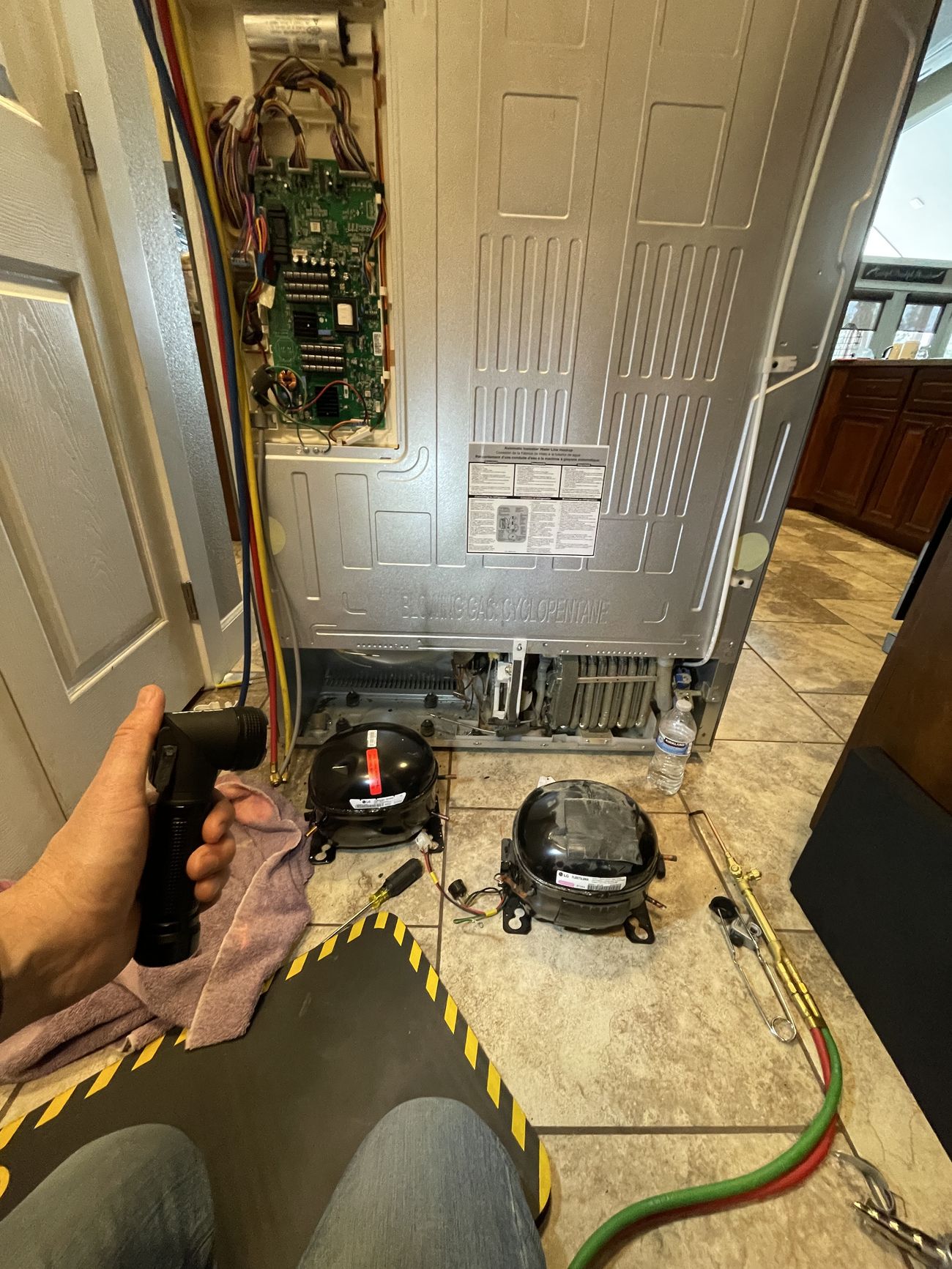
For connected fridges, our routine is simple. We start with the error history and sensor readings, either from the display's service mode or from what the app shows, and compare them with a probe thermometer and the frost pattern on the evaporator. Sensors drift, and a fridge acting on a bad reading will freeze lettuce or let milk warm while reporting that everything is fine. Once we know which part failed, you get the price in writing. If the app shows a pending software update, we let it install first; now and then that alone clears a control glitch, and it costs you nothing to try before a new board goes in.
The city buys Tolt River water from Seattle by way of the Cascade Water Alliance, and its 2025 quality report lists hardness at 1.43 grains per gallon. Above NE 124th Street, many homes are on Northshore Utility District water instead, drawn from that same Tolt source. Either way, it is soft, so scale is rarely why a valve or dispenser fails here. Power comes from Puget Sound Energy, and the board faults we see after long outages, like the November 2024 windstorm, are a reason to check the outlet voltage before replacing electronics.