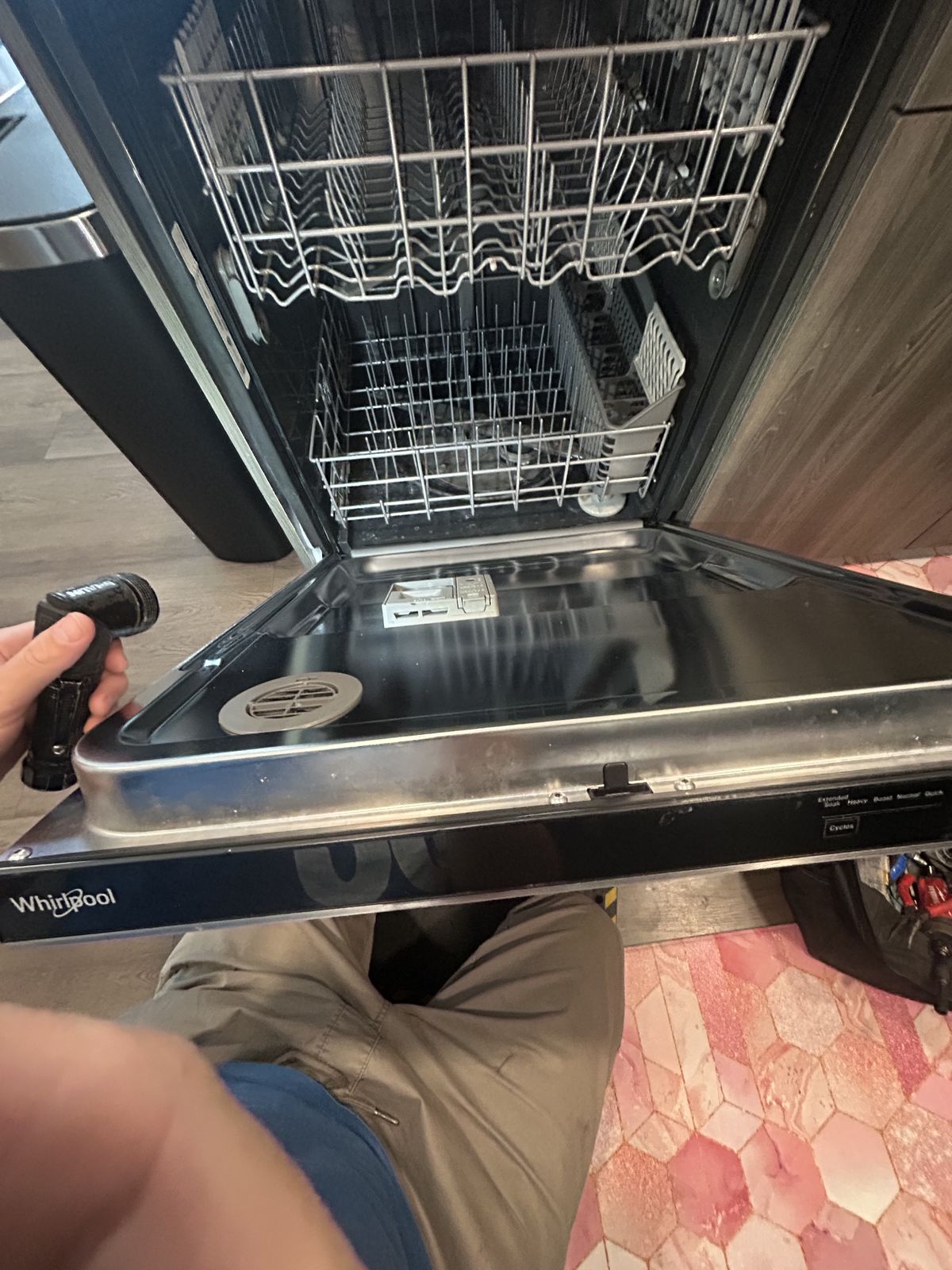
Bringing home a new fridge is a delivery. Changing out a dishwasher, cooktop or wall oven that is wired straight into a junction box is electrical work under Washington law, with its own answer to who may do it and when a permit is needed. Here is how the state draws those lines for a house or rental in the north Seattle area, and where the line sits between an appliance swap and a job for an electrician.
Plug-in or hardwired comes first
L&I sorts household appliances by how they connect. A plug-in appliance, one that leaves the manufacturer with its power cord attached and is designed for the owner to set up, needs no electrical permit, no inspection and no electrical contractor to install, replace or repair. Anyone can do it.
Hardwired appliances follow different rules. In the kitchens we see that usually means the dishwasher (often a short whip into a box under the sink), a built-in cooktop or wall oven fed from a junction box, and sometimes the disposal. Freestanding ranges and dryers more often connect by cord to a 240-volt receptacle, but older houses still turn up hardwired ones, and the receptacle and circuit behind any appliance are fixed wiring.
What "like-in-kind" means
Nearly every rule below hinges on that phrase. Washington's electrical rules (WAC 296-46B-100) spell it out in four parts: the new unit needs the same breaker or fuse size, a close match in voltage, amperage and fault characteristics, the same job within the system, and the same spot. A new 24-inch dishwasher on the existing 20-amp circuit in the same opening fits. A 36-inch induction cooktop replacing a 30-inch radiant one does not fit if it calls for a larger breaker, and neither does a wall oven moving to a cabinet across the room.
When a permit applies
Under L&I's appliance guidance:
- Replacing one hardwired appliance like-in-kind needs no electrical permit. Replace more than one, such as a cooktop and a wall oven during the same kitchen refresh, and a permit and inspection apply.
- Installing a hardwired appliance where none was connected before always takes a permit and an inspection.
- Repairs need a permit unless they fall in the state's short list of minor work. That list includes like-in-kind swaps of relays, timers, control boards and similar components, and up to five heating elements, so most repairs inside a dishwasher or oven run without one.
Doing it yourself on your own property
State law lets owners do electrical work at their own home, farm, place of business or other property they own without an electrical license (RCW 19.28.261). Two exceptions apply: a new building meant for rent, sale or lease, and a property offered for sale within 12 months after the owner acquired it. That second one is aimed at quick flips.
When the job needs a permit, only the owner or an electrical contractor may buy it, and the owner's permit covers work the owner does personally (or, on some property types, a regular employee). L&I's owner permit application states that relatives, property managers and real estate agents cannot buy one for the owner. Seattle is narrower than the state: its electrical permit page allows owners to do their own work when they own and occupy the property. A Seattle landlord who does not live in the rental should plan on hiring a licensed electrical contractor for hardwired work there.
When you hire it out: what 07D covers
If someone else does the work, L&I requires an electrical contractor. The appliance repair specialty, 07D, is built for most kitchen and laundry swaps. Under WAC 296-46B-920 it covers:
- servicing, maintaining, repairing and replacing household appliances;
- replacing an appliance in place, like-in-kind, when the same unmodified circuit feeds it;
- disconnecting and reconnecting a supply whip no longer than six feet, without changing the branch circuit;
- when a hardwired unit is being changed over to cord and plug, putting in a box and outlet where the appliance already sits.
The appliance has to be self-contained and connect as one unit to a single supply of 250 volts or less, single phase, 60-amp maximum. A dishwasher, disposal, cooktop, wall oven or dryer usually fits inside those limits.
When it takes a general electrician
07D ends where the circuit begins. It excludes branch circuits, services, feeders, panelboards and disconnects. These situations go to an electrical contractor licensed 01 (general) or 02 (residential), and normally on a permit:
- a first dishwasher or disposal where no circuit exists;
- a range, cooktop or oven that needs a larger breaker or heavier wire than the old one;
- moving an appliance to a new location;
- a shared circuit that has to be split so two appliances each get their own.
The water and gas side
A dishwasher also has a water supply and a drain, and a gas range or dryer has a gas connector. The appliance repair specialty leaves plumbing out, and L&I points owners to the local city or county building department, since water, sewer and gas hookups can carry their own building or plumbing permits there. If a supply line or gas line has to move, check with the city's permit desk first.
How we handle it
On a dishwasher, oven or cooktop visit we stay inside 07D: like-in-kind, same circuit, same opening. If a new model needs a circuit change, we say so before anything is disconnected; that part belongs to a general electrical contractor and is quoted on its own. More on the specialty is on our 07D appliance repair page, and all three of our credentials are on licenses. For a dishwasher that leaks or will not drain, see dishwasher repair; for ranges, cooktops and wall ovens, oven repair. Phone (425) 570-9520, or pick a time through the booking form.