What the 07D specialty is
WAC 296-46B-920 defines 07D as servicing, maintaining, repairing or replacing household appliances, small commercial and industrial appliances, and other small electrical utilization equipment. Its list of examples runs wider than most people expect: ovens, office equipment, vehicle repair equipment, commercial kitchen equipment, self-contained hot tubs and spas, grinders and scales. A size test ties them together. Each unit has to be self-contained, built to standardized sizes or types, and connected as a single unit to one power source with a 250-volt, 60-amp maximum, single phase.
The same rules that govern every Washington electrical contractor apply here. State law sets the electrical contractor bond at $4,000, and the company needs an assigned electrical administrator or master electrician. An administrator whose certificate is in a specialty can serve only a contractor licensed in that same specialty.
What 07D covers, appliance by appliance
The rule allows three kinds of work, plus one conversion:
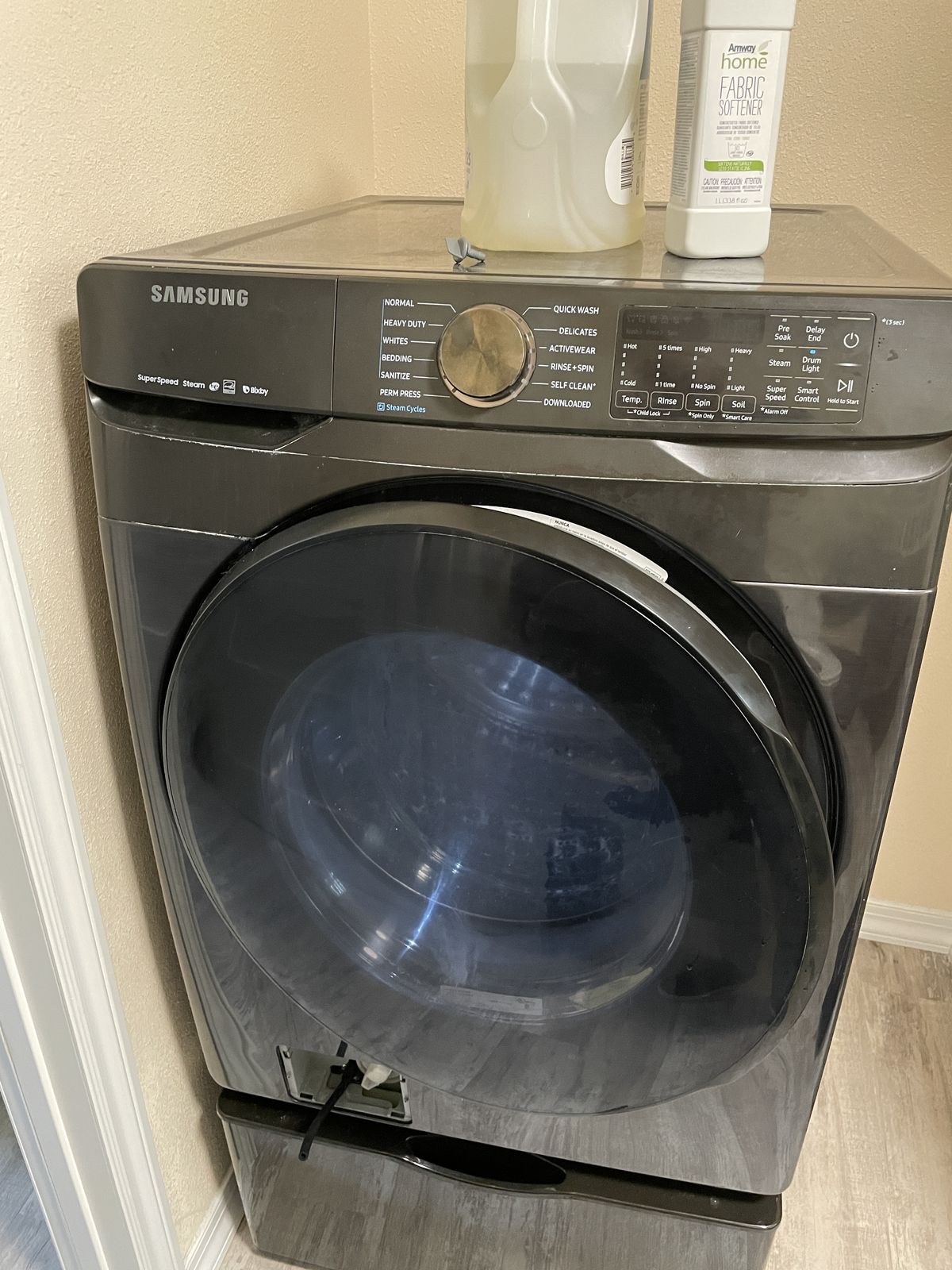
- Repairs and like-in-kind replacement of electrical components inside the appliance: a refrigerator's defrost heater or start relay, a washer's lid lock or control board, a dryer's heating element, an oven's bake element or igniter, a dishwasher's heater or drain pump.
- In-place like-in-kind replacement of the whole appliance, as long as the same unmodified circuit feeds the new one.
- Disconnecting and reconnecting low-voltage control leads and line-voltage supply whips up to six feet, with no change to the branch circuit.
- Installing an outlet box and receptacle at an existing hard-wired appliance location to convert it to a plug and cord. Apart from that box and outlet, the existing circuit may not be modified.
In everyday terms, our refrigerator, washer, dryer, oven and range, dishwasher and ice maker repairs all sit inside this specialty.
What 07D means for you
A good share of appliance work falls on the state's Class A list, the basic jobs that need no electrical permit when done like in kind: one household appliance, control components such as relays, timers and circuit boards, up to five heating elements, and one motor of ten horsepower or less. L&I's homeowner guidance draws a second line worth knowing: anyone may install, repair or replace a plug-in appliance, but a hard-wired one, which describes many cooktops, wall ovens and built-in dishwashers, needs a licensed electrical contractor whose electricians hold state certificates.
Cities that run their own electrical inspection follow their own lists. Seattle, for one, says a permit is needed for all electrical work except the few items its electrical code names. Wherever you live, the license means the technician reconnecting a wall oven's supply whip or replacing a range's control board is working inside a defined state scope, for a company with a bond and a public record you can check before the visit.
What 07D leaves out
The specialty stops at the appliance. It excludes installing, repairing or modifying branch circuit conductors, services, feeders, panelboards, disconnect switches, and raceway that ties several appliances or devices together, as well as any work in classified hazardous locations. The rule also names equipment that does not count as an appliance for 07D: alarm and energy management systems, light fixtures, sewage disposal equipment, door and gate operators, systems built from separate pumps, switches and controllers, and furnaces, heaters, air conditioners and heat pumps. That last group is why heating and cooling calls run under our 06A license instead.
Plumbing regulated by the state plumbing law is outside 07D too. And the size test rules out anything above 250 volts, anything needing more than a 60-amp supply, and three-phase equipment. If a new range needs a heavier circuit than the old one, or a laundry move needs a new dryer receptacle run from the panel, a general (01) electrical contractor handles that wiring under its own permit, and it is quoted as a separate item.
How to check our 07D license
Go to L&I Verify, choose the license or UBI search, and enter our UBI, 605283205. The electrical contractor record should list Appliance Repair (07D) under its specialties, with effective and expiration dates. Records filed before our 2026 name change carry the earlier business name, ADAM&SAM BROTHERS REPAIR; newer ones read LARCH HVAC & APPLIANCE. Then look at License Violations, and at Workers' Comp, which tells you whether the employees who come to your kitchen are covered.
L&I refreshes the database each business day and cautions that some entries may be out of date, so if something looks off, ask us or ask L&I. Our other two credentials are listed on the licenses page.