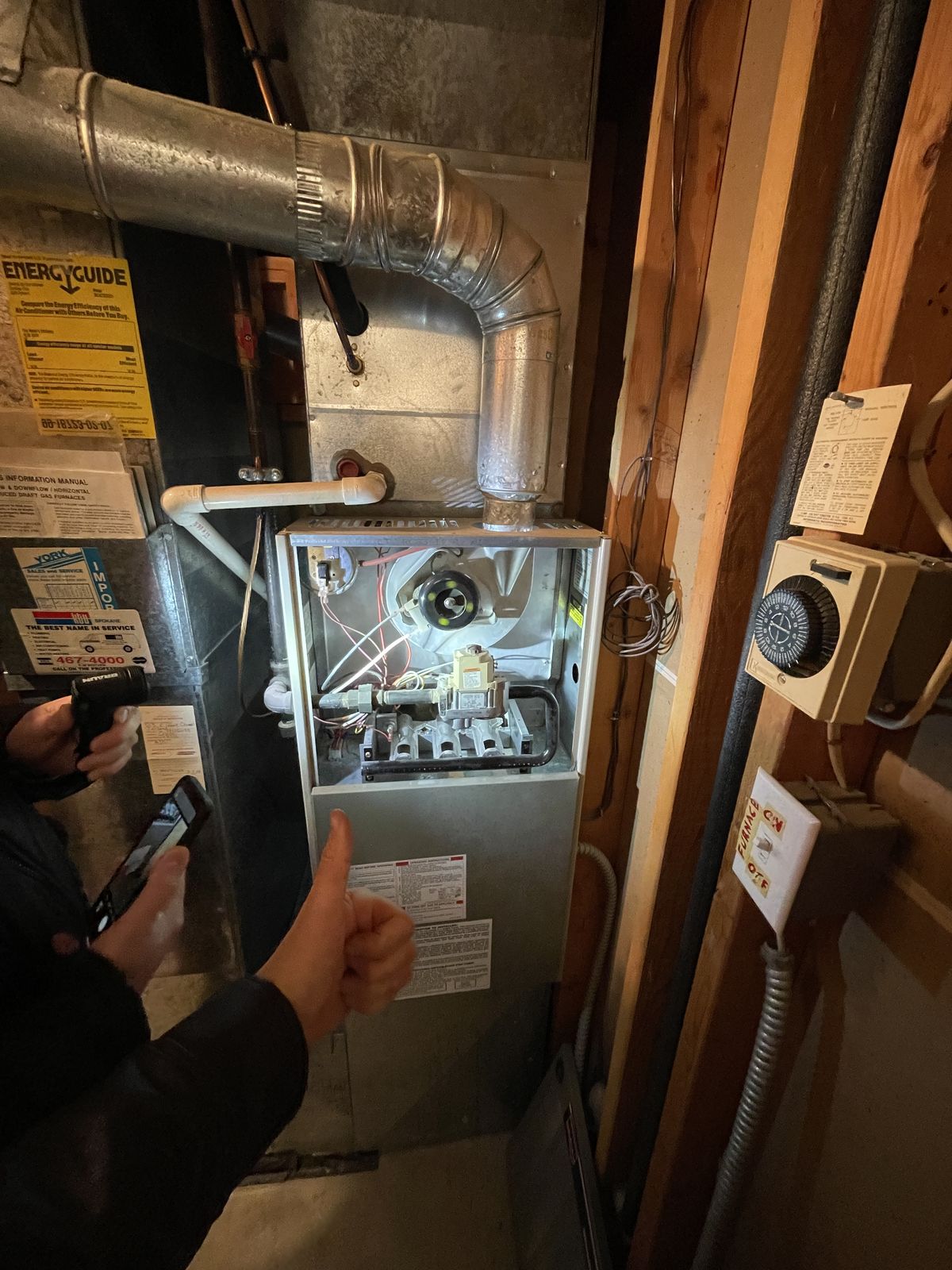
Before anyone opens your furnace cabinet or slides a dishwasher out from under the counter, you can look them up in a few minutes. Washington keeps one public record for contractor registrations, electrical contractor licenses and individual electrician certificates, and the state Department of L&I runs it. Here is how we would walk a neighbor through that record for an HVAC or appliance job, and which lines on it should make you stop and ask.
Step 1: open Verify and search by number
The tool is L&I Verify. It accepts a full or partial business or owner name, a UBI number, or a contractor license number. Names make the weakest search: companies rebrand, owners trade under other names, and a common word returns pages of near-matches. Ask the company for its UBI (the Washington business identifier) and paste that in. Every license and registration tied to the business then appears on one record, along with the owners' names, so you can see whether the people you met are the people listed.
Step 2: read the license type before the status
Each credential shows a line called License specialties. For heating, cooling and appliance work you are looking for one or both of these:
- Construction contractor registration, specialty General or one named specialty. This is the bonded, insured registration a business needs to build, alter or repair structures for customers.
- Electrical contractor license, with a code such as 01 (general electrical), 02 (residential), 06A (HVAC/refrigeration) or 07D (appliance repair). L&I says plainly that a business engaged in electrical construction needs this license.
The difference matters on your job. Swapping a heat pump, running new thermostat cable or reconnecting a hardwired cooktop is electrical work, and a construction registration on its own does not cover it, however long the company has been around. For a furnace, heat pump, air conditioner or mini-split, look for 06A, or a general or residential electrical contractor. For a hardwired household appliance, look for 07D, or again 01 or 02. The appliance specialty names heating and cooling equipment among the things it does not cover, so a company holding only 07D is outside its scope on your heat pump.
Step 3: status, dates and the suspend line
Next to each credential you will find an effective and expiration date and, when it applies, a suspend date. A license can be suspended over a canceled or expired bond or insurance, penalties still owed to L&I, or, for an electrical contractor, having no current administrator. State law requires every electrical contractor to designate an administrator or master electrician qualified for its specialty, so a missing one is not a paperwork footnote. If the expiration date falls next week, ask whether the renewal is filed. Open the Past and related licenses link as well: a run of short-lived businesses under the same owners deserves a question.
Step 4: the bond and any lawsuits against it
The Bond block names the current bond account. For a construction registration, RCW 18.27.040 puts the bond at $30,000 when the business is registered as general and $15,000 when it is registered as a specialty; those amounts apply since July 2024, and a registration from before then moves up to them at renewal. An electrical contractor license carries its own, smaller $4,000 bond. Right below sits a line for lawsuits filed against that bond. One old suit against a busy company is not a verdict on its own; several recent ones, or one still open, call for an explanation before you sign anything.
Step 5: insurance and workers' comp are separate checks
The Insurance block belongs to the construction registration. RCW 18.27.050 sets minimum liability coverage at $50,000 for property damage, $100,000 for injury to one person and $200,000 for injury to more than one, and the registration is suspended automatically when the policy lapses. Electrical licenses work differently: L&I encourages liability coverage for electrical contractors but keeps no record of it, so ask an electrical-only firm for a certificate of insurance.
Workers' comp is its own section. Verify shows whether the business has an active workers' comp account and lets you print a certificate of coverage. A company sending employees into your basement should have one. A one-person shop with no employees may legitimately show none, and then the useful question is who exactly will arrive at your door.
Step 6: violations and the person holding the tools
Scroll to License Violations and to Workplace Safety & Health. For HVAC and appliance work the license violations list is the one to read slowly; ask about anything recent. Then check the technician, not only the company. Verify also shows whether an individual electrician holds a current certificate, and L&I requires that electrical work be done by electricians holding the proper certificate. Ask for the name of the person coming and look it up the same way.
Red flags we would not ignore
- The name on the van or the estimate matches no record, and nobody will give you a UBI or license number.
- Only a construction registration appears, yet the job includes connecting a heat pump, furnace or hardwired appliance.
- The electrical specialty does not fit the equipment, such as an appliance repair license on a heat pump install.
- A suspend date, an expired bond, or open lawsuits against the bond.
- You are asked to buy the permit. L&I lists that request among its warning signs, and an electrical permit has to be bought by whoever does the work.
- Cash only, a large deposit, payment made out to a person instead of the business, or a price that holds only if you sign today. Those come straight from L&I's own list of warning signs.
Checking us
We would rather you check than take our word for it. Larch HVAC & Appliance holds three L&I credentials: electrical contractor licensing in two specialties, 06A for heating and cooling and 07D for appliances, plus a General construction registration. Search UBI 605283205; newer records read LARCH HVAC & APPLIANCE, and older ones show our former name, ADAM&SAM BROTHERS REPAIR. Our licenses page lays out all three, and the 06A HVAC/refrigeration page explains what that specialty covers on a furnace or heat pump. If the record checks out and your heat is acting up, see furnace repair, or call (425) 570-9520 to book a visit.