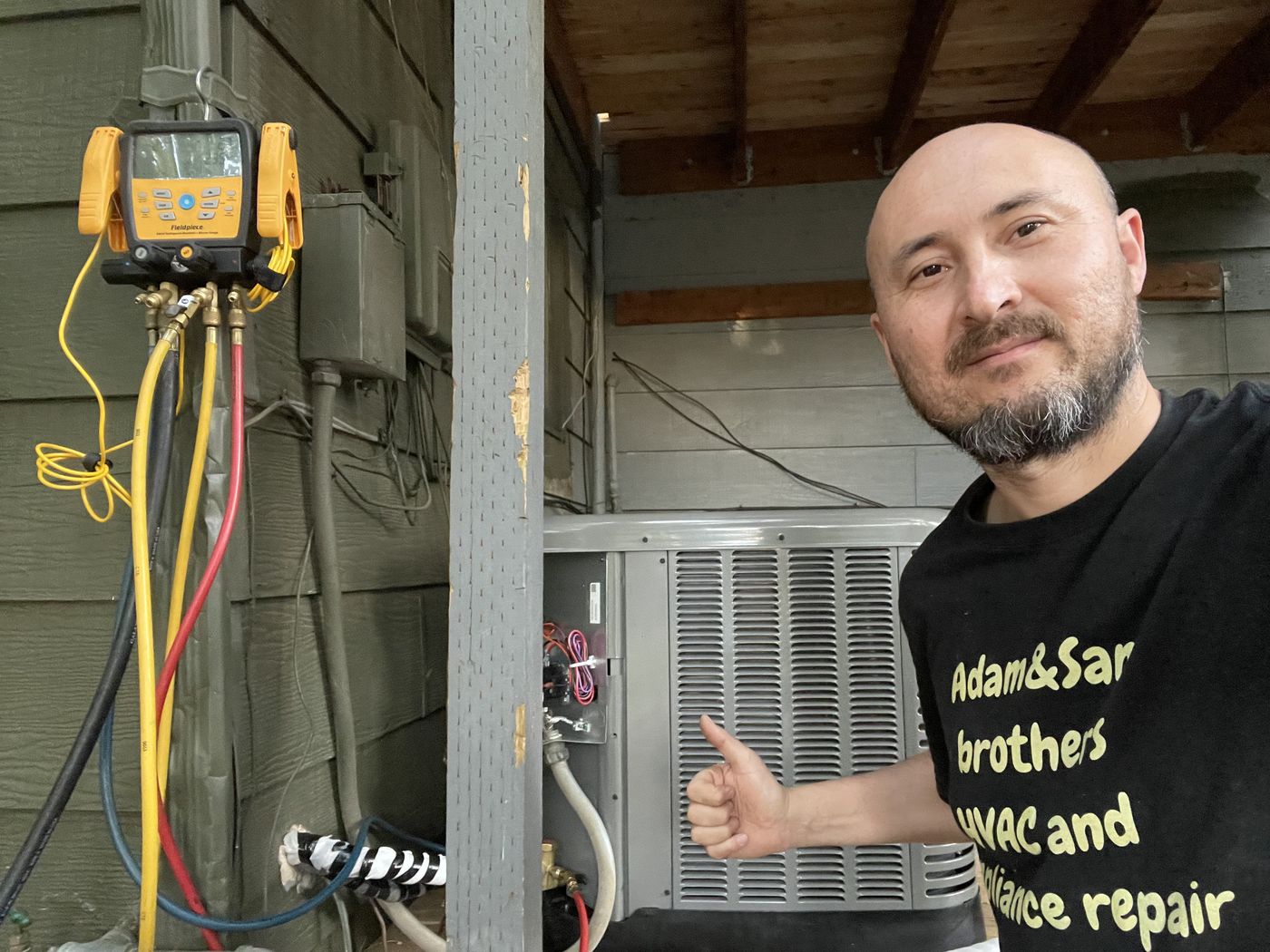
A contractor who is set up properly can answer every question on this list in one phone call, without getting defensive. Each question below comes with what a solid answer sounds like and a way to confirm it yourself, so you are not relying on anyone's word, ours included. Keep the list by the phone the next time the heat pump quits or the dishwasher needs replacing.
1. Which L&I credentials do you hold, and in which specialty?
A solid answer names the business, gives a UBI or license number, and matches the specialty to your equipment: an electrical contractor license in 06A (HVAC/refrigeration) for heating and cooling equipment, or 07D (appliance repair) for a hardwired appliance. An electrical contractor licensed 01 or 02 can also do this wiring. A construction registration alone does not reach electrical work.
Confirm it by entering the number in L&I Verify. You want an active status, no suspend date, and the right specialty. Our walk-through of the Verify record shows what each section means.
2. Who will actually do the work?
A solid answer is a named technician on the company's own payroll, or, if part of the job goes to a subcontractor, that company's name up front.
Confirm it two ways. Verify covers tradespeople as well as businesses, so search the technician's name and see that the electrician certificate is current. On the company's record, the workers' comp section tells you whether its employees are covered by an active account. A subcontractor needs its own credentials, and on electrical work each business needs its own permit; two companies cannot work under one.
3. Does this job need a permit, and who buys it?
A solid answer is "yes, and we buy it" whenever a whole HVAC unit is being replaced and for more than one hardwired appliance at a time. For a repair, it may be "no," with the reason: a like-in-kind control board, relay or contactor, or a single like-in-kind appliance swap, sits on the state's short exempt list.
Watch for a request that you buy the permit. Under L&I rules the business doing the work purchases the permit; one bought by the homeowner for someone else's work is not valid, and L&I counts the request among its hiring warning signs. After the job, look the permit up by address on L&I's permit lookup, or, for an address inside one of the five local cities that inspect their own electrical work (Seattle, Everett, Kirkland, Lynnwood, Mountlake Terrace), on that city's portal.
4. Can I have it in writing before you start?
A solid answer is a written estimate that lists the work, the equipment model for an install, and the permits. For residential work with a bid or contract of $1,000 or more, a registered contractor must also give you a Notice to Customer before starting (RCW 18.27.114). It explains the contractor's bond, warns that the bond might not cover a claim, and describes how unpaid suppliers or workers could put a lien on your property. A contractor who skips it gives up the right to file a lien on that contract.
Confirm it by holding the paper before anyone opens a panel. L&I's hiring guide lists a missing written contract or incomplete bid as a warning sign.
5. What does the diagnostic visit cost, and where does it go?
A solid answer names the fee before the visit, says whether it counts toward the repair, and says what you owe if you say no. Our office names the diagnostic fee when you call or book, since it depends on the equipment and the visit: say yes to the repair and the fee is folded into the repair price; say no, and the diagnostic fee is all you pay, with the findings yours to keep. Install site visits and written install quotes cost nothing.
Confirm it on the booking confirmation, before a technician is on the way.
6. Are you bonded and insured, and can I see it?
A solid answer is yes, with paperwork. A construction registration carries a bond of $30,000 (general) or $15,000 (specialty) and liability insurance at state minimums. If a contractor breaches a contract on your home, you have two years from substantial completion or abandonment of the work to sue on that bond.
Confirm it on Verify, where the bond account appears along with any suits filed against it. Ask for a certificate of liability insurance as well; L&I suggests asking to see the policy and, on a larger project, having your own agent review it. This matters most with an electrical-only business, because L&I does not track liability policies for electrical contractors, only recommends them.
7. How and when do you expect payment?
A solid answer ties payment to finished work. L&I's warning list covers the alternatives: cash only, large deposits or the full price upfront, payment made out to an individual rather than the company, and a special price offered on the condition that you sign on the spot. Its plain advice is not to pay in full until the job is done.
Our answers, for the record
Larch HVAC & Appliance holds electrical contractor licenses in 06A and 07D and a General construction registration, and our own technicians do the HVAC and appliance work. If a job needs a new circuit, that piece is quoted separately from a general electrical contractor, and we tell you so before work begins. Every credential is listed on licenses, with the registration and its bond on the general contractor page. For a heat pump or AC that is not keeping up, start at AC and heat pump repair; for a seasonal check, see HVAC maintenance. Ask us all seven when you call (425) 570-9520, or when you book through the online form.