Skip to content
Shop in Mountlake TerraceMon–Sat 8 AM–7 PM · Sunday closed Book online: up to $18 off the repair
LarchHVAC & Appliance (425) 570-9520
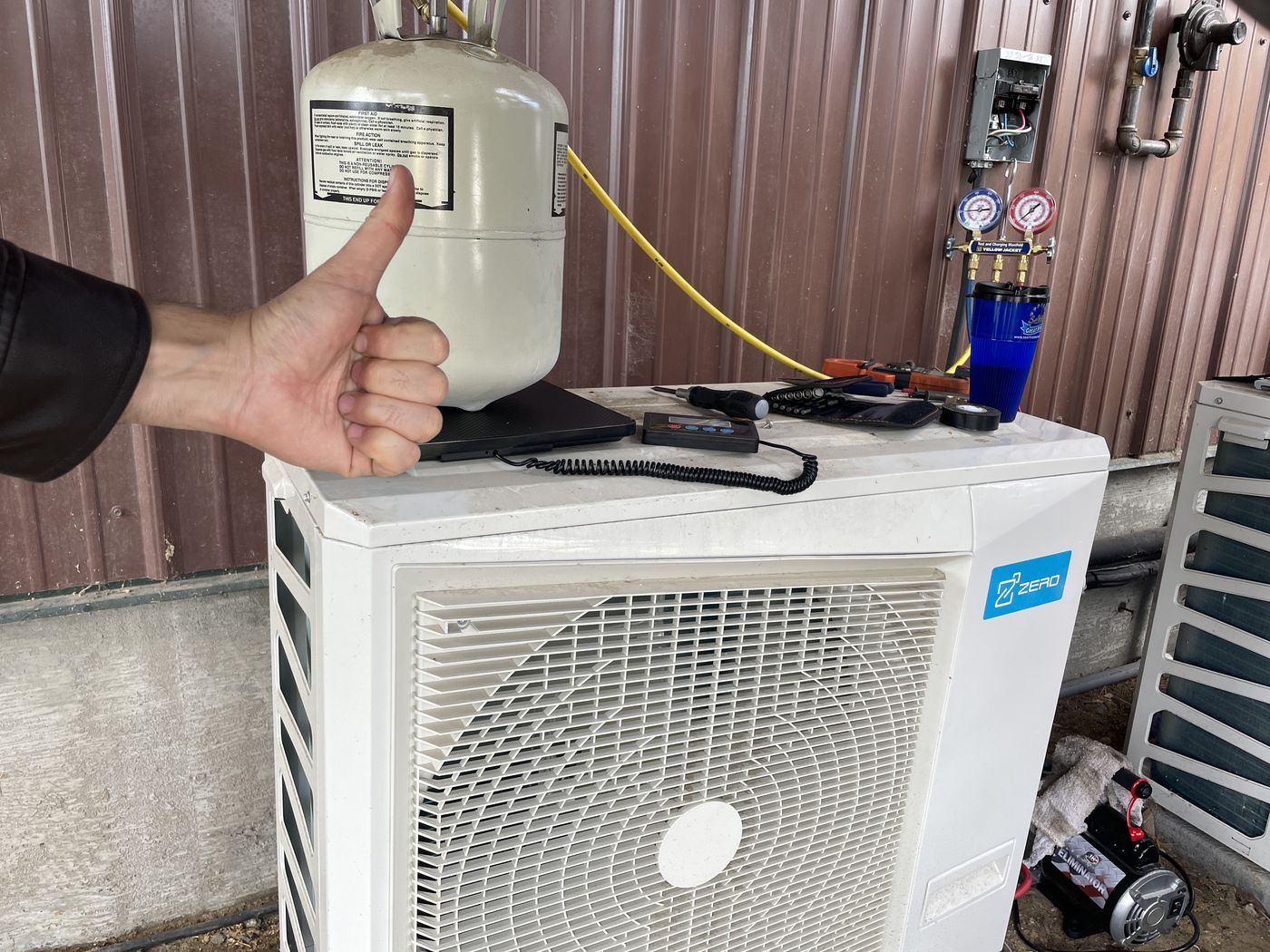
Charging a heat pump outdoor unit with refrigerantFormerly Adam & Sam Brothers Repair

North Seattle · Ductless heat pumps

Ductless heat pumps for north Seattle homes

North of 85th Street, much of Seattle is post-war houses that were annexed in 1954 and still heat with baseboards or an aging electric furnace. We plan mini-split conversions for those homes and repair existing systems from Northgate to Lake City and Greenwood.

Drive time
Northgate 13–17 min, Lake City 16–20, Greenwood 17–21.
Electric heat
About 61% of Seattle homes heat with electricity.
City Light
Seattle City Light serves north Seattle; we check applicable programs.
  • $85 diagnosticBecomes part of the repair price when you say yes. If you pass on the repair, that visit is all you pay.
  • Up to $18 offAny repair requested through the online form. The diagnostic itself is never reduced.
  • No-charge site visitInstalls are quoted in writing, equipment and installation work in one number.

In 1954 Seattle moved its northern limit from 85th Street to 145th, taking in Lake City, Greenwood's northern half and the neighborhoods between. Much of that area had been built in the 1940s and 1950s as small suburban houses: ramblers and one-and-a-half-story homes on modest lots in Maple Leaf, Pinehurst, Haller Lake, Bitter Lake and Broadview. Northgate grew around one of the country's first covered malls, opened in 1950, and Thornton Creek still winds past North Seattle College nearby. Across the city, about 61% of homes heat with electricity, and in these post-war houses that usually means wall baseboards or an electric furnace in the basement, both of which cost more to run than a heat pump.

A ductless heat pump is a natural way to retire an electric furnace or cut back on baseboards in a house like that. Each head hangs high on a wall in a room you use every day, the outdoor unit takes a corner of the side yard, and the baseboards can stay on the wall as a fallback until you decide they have earned retirement. Cooling comes with it, which mattered in June 2021, when Sea-Tac set an all-time record of 108°F and fewer than half of Seattle-area homes had air conditioning. From Northgate and Lake City to Greenwood, about 13–21 minutes from our shop, we put in new mini-splits, repair old ones and deep-clean both. Recovery, vacuum and charging are done in-house under EPA Section 608 rules, and if you get in touch in the morning, Monday through Saturday, we can usually come the same day.

Mini-split problems in north Seattle houses

  • Outdoor unit tilting on its pad in Greenwood

    Likely cause
    Peat soil settling under the pad, stressing the line set
    What we do
    Re-level or move to a bracket, then leak-test the lines
  • Oily stain under a flare connection

    Likely cause
    Refrigerant leaking at a joint, often after movement
    What we do
    Cut and re-flare the joint, hold nitrogen, recharge by weight
  • Daikin head shows L5 and shuts down

    Likely cause
    On many Daikin units, an overcurrent trip in the compressor circuit
    What we do
    Check supply voltage, the compressor and the inverter board
  • Converted baseboard house is cold in the back bedrooms

    Likely cause
    Heads placed for the main rooms only; doors closed
    What we do
    Review the layout, add a zone or keep backup heat there
  • Head drips onto a hardwood floor

    Likely cause
    Drain line with too little fall or a clogged outlet
    What we do
    Clear the drain and fix its slope
  • Backyard cottage head blows lukewarm air

    Likely cause
    Low refrigerant, a dirty coil or the wrong mode
    What we do
    Clean, check settings, then test the charge

Baseboard conversions, peat soil and backyard cottages

Our north Seattle conversions usually begin with a walk through rooms heated by baseboards, or in the basement at an old furnace whose ducts are too small, too leaky or too few to carry a heat pump's gentler airflow. A typical plan puts the first head where the family spends its evenings and a second in the bedroom hall, which is enough to leave the old heat off from spring through most of the winter. The baseboards or furnace can stay in place as backup, and removing them later is your call, on your own timeline. Seattle City Light supplies the power here, and both City Light and the City of Seattle have run heat pump programs; we look into which of these fit your house as part of the quote, without promising amounts.

Greenwood was built partly on a peat bog, and the city has listed peat areas as environmentally critical since 2008. Soft ground lets buildings settle, and it can let a concrete pad tilt over a few years. A tilted outdoor unit strains the line-set connections, which is a common route to a slow leak. Where the soil is soft, we prefer a wall bracket fastened to the house framing or a pad set on compacted gravel, and we check flare joints closely on service visits. Houses that have already settled can also have sloped floors and out-of-square walls, so we level each mounting plate on its own instead of trusting the trim.

North Seattle also has many backyard cottages and basement apartments, and those small units are a natural fit for a single head with its own outdoor unit. Light rail has run through Northgate since 2021, and the Kraken practice facility sits there too, yet a few blocks away the streets are still lined with post-war houses that never had central cooling. Around the station, newer townhomes and apartments add association rules and tight side yards. In Lake City along Lake City Way NE and on to Ballard's apartment blocks, we plan units with neighbors close by, so placement and quiet operation come first.
Sam with a newly installed mini-split outdoor unit

North Seattle mini-split prices

Mini-split repair and cleaning in Seattle start at $285. Leaks are a common call, and we do not simply top off a leaking system, because the charge would be gone again by spring. For a new system, one zone starts at $4,000, covering the equipment and the installation, and every head beyond the first starts at $2,250. Most baseboard conversions use two or three heads, so they are quoted on request as multi-zone systems after the walk-through; neither the visit nor the written quote costs anything. None of this is a quote for your home. These are the area's starting figures. For a repair, the exact number goes into the written estimate when we report what the diagnostic found, whether the leak is at a flare fitting or in a coil; on a conversion, the real number comes in writing once we have measured the house.

See all prices

  • Mini-split deep cleaning (per indoor head)from $285
  • Mini-split fan motorfrom $375
  • Mini-split control boardfrom $475
  • Mini-split leak repair and rechargefrom $550
  • Diagnostic visit$85, included in the repair

Starting prices for the north Seattle area, 2026. The $85 diagnostic is included in any repair you approve, and the exact price is in the written estimate before work starts.

System, installed

  • Ductless mini-split, single zonefrom $4,000
  • Each added mini-split zonefrom $2,250
  • Multi-zone mini-split systemsOn request

Install prices start here, equipment and installation included, before any utility program. Multi-zone systems are priced after a visit. We do not charge for the site visit or the written quote.

Repair, replace or finish the conversion?

Many north Seattle mini-splits were installed as a first step: one head in the living room while the electric furnace or baseboards kept doing the rest. When one of those systems fails, consider whether to repair it or finish the job. A leak at a flare joint, a fan motor or a sensor is a reasonable repair while the equipment is still under a dozen years old. A failed compressor, or a leak caused by a pad that has settled for years, on an older unit is a good reason to replace it and design a full multi-zone plan that finally lets the baseboards go cold for good. Older systems that use R-22, which is no longer produced, are expensive to recharge. The written estimate lists three paths, repair, replacement and a full conversion, with a price beside each.

Common questions

We still heat with baseboards. Is a mini-split a realistic replacement?

For most 1940s and 1950s houses north of 85th, it is. The living room and the bedroom hall usually take one head each, sometimes a third for a basement or a closed-off room, and you can leave the baseboards connected for the first winter as insurance. Where an old furnace left solid ducts that reach every room, we may suggest a ducted heat pump instead.

Does Greenwood's soft ground affect a mini-split?

It can. On peat soil, a concrete pad can settle and tilt over time, which strains the line-set connections and can lead to leaks. Where the soil is soft, we mount the outdoor unit on a wall bracket fastened to the house framing, or set the pad on compacted gravel, and we check the joints on service visits.

Are there city or utility programs for switching to a heat pump?

Seattle City Light and the City of Seattle have both run heat pump programs, and their rules shift from year to year. Which of them fit depends on where you live, what you heat with now and the equipment you choose. We sort that out while writing your quote, and we do not quote program amounts, since those move too.

What does L5 mean on my Daikin?

On many Daikin systems, L5 points to an overcurrent trip in the compressor circuit. Low supply voltage, a failing compressor or a fault in the inverter board can all cause it. Cut power at the breaker for a few minutes, then restart. If L5 comes back, leave the system off and call us with the code and the model number from the sticker on the outdoor unit.

Can a mini-split heat a backyard cottage?

Yes, and it is often the simplest option. One head with its own outdoor unit is usually enough for a small cottage or basement apartment, and the occupant controls it separately. We check the electrical feed, choose a quiet location for the outdoor unit and size the head for the space.

Talk to Adam & Sam

Reach us at (425) 570-9520 by phone, or book online to trim up to $18 from the repair. Once you approve the work, the $85 diagnostic is part of the repair price, and conversion walk-throughs and written quotes cost nothing.

From Sam’s repair notes

Schedule a repair

Request a visit from Adam & Sam

Send the basics and we call you back with an arrival window, most days the same morning.

  • $85 diagnostic Becomes part of the repair price when you say yes. If you pass on the repair, that visit is all you pay.
  • Up to $18 off Any repair requested through the online form. The diagnostic itself is never reduced.
  • $10 off A second appliance’s diagnostic when we check it during the same trip.

Requests sent from this form get up to $18 off the repair. The $85 diagnostic stays the same and is folded into any repair you approve.

CallBook